Haere mai! Welcome to Mairtown Kindergarten's blog.

Nau Mai Haere mai. Welcome to Mairtown Kindergarten's blog.


21 Princes Street, Kensington, Whangarei, New Zealand

Phone: 09 437 2742

Email: mairtown@nka.org.nz

Tuesday, 16 February 2016

Risky play - children love it and need it.


Fear, you would think, is a negative experience, to be avoided whenever possible. Yet, as everyone who has a child or once was one knows, children love to play in risky ways—ways that combine the joy of freedom with just the right measure of fear to produce the exhilarating blend known as thrill (Peter Gray, 2014)


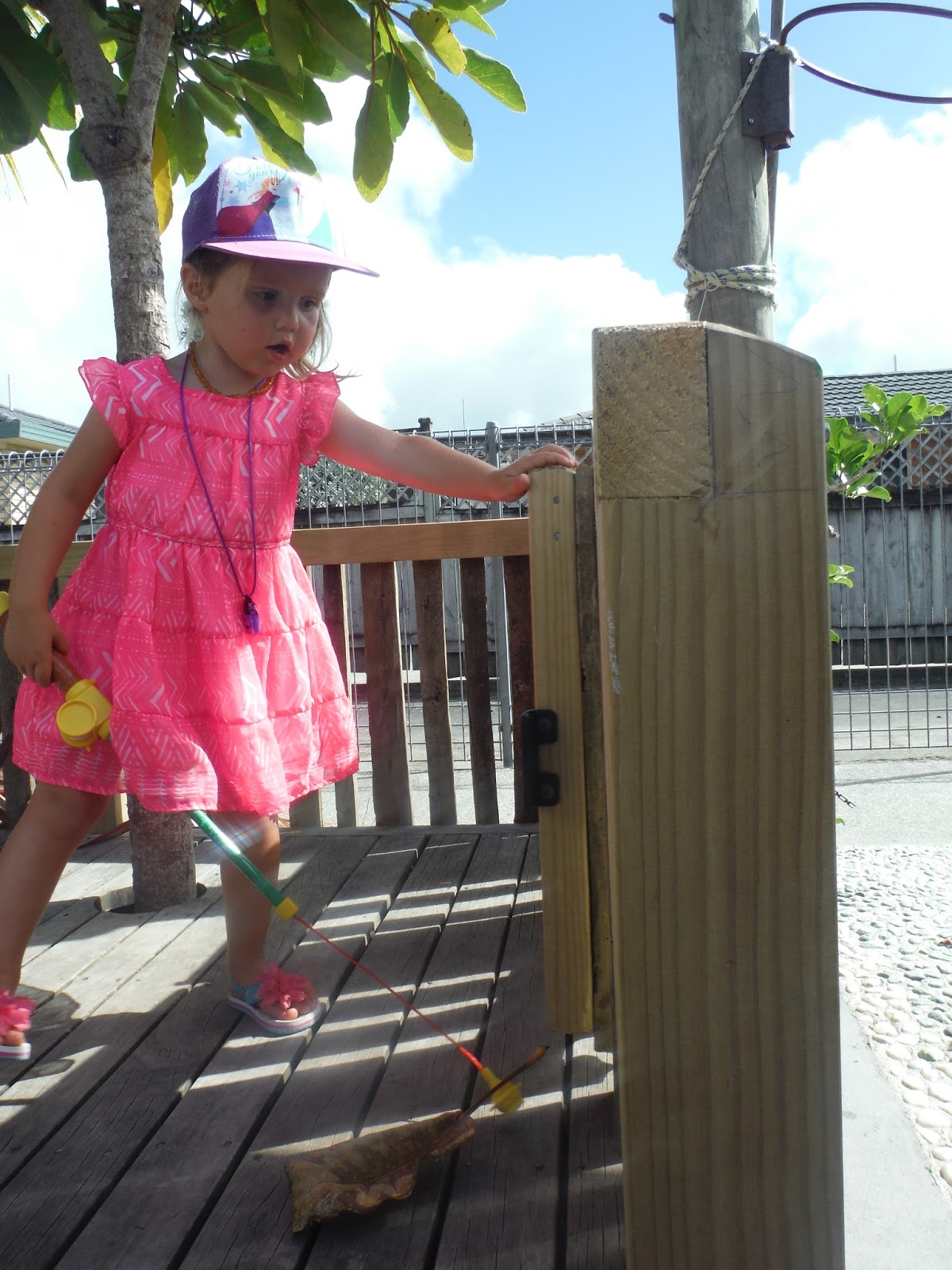
At Mairtown we foster aspects of risky play for children, we allow tree climbing and rock jumping and provide an environment and programme which not only challenges children but allows them to encounter, manage and master their own risks.

We also know, as do all our whānau, that our children are confident, capable and willing (as well as wanting and needing) to push their boundaries; to engage in some risky activities which ultimately will provide opportunities for them to learn new skills, try new behaviours and reach their fullest potential.


This week I read an interesting article about risky play by Peter Gray - a researcher in educational psychology from Boston University - and it made me think really hard about our play at Mairtown and what we consider is normal and expected for children’s learning and development.

So just briefly I thought I’d share some photos of our children engaged in play that feels risky for them, along with a couple of extracts from the article. I hope it makes you think as much as it did me – risky play can be worrisome to observe as an adult - yet I know I climbed trees, tried to jump across streams etc., as a child - at the time, that was what I sought out and craved. I feel that risky play is something that children need and ultimately have a right to experience. How does it make you feel?


Children are designed by nature to teach themselves emotional resilience by playing in risky, emotion-inducing ways.  In the long run, we endanger them far more by preventing such play than by allowing it. And, we deprive them of fun (Peter Gray, 2014)


Children are highly motivated to play in risky ways, but they are also very good at knowing their own capacities and avoiding risks they are not ready to take, either physically or emotionally. Our children know far better than we do what they are ready for…Children know how to dose themselves with just the right amount of fear, for them, and for that knowledge to operate they must be in charge of their own play. (Peter Gray, 2014).


In risky play, youngsters dose themselves with manageable quantities of fear and practice keeping their heads and behaving adaptively while experiencing that fear.  They learn that they can manage their fear, overcome it, and come out alive.  In rough and tumble play they may also experience anger, as one player may accidentally hurt another.  But to continue playing, to continue the fun, they must overcome that anger.  If they lash out, the play is over.  Thus…[risky] play is, among other things, the way that young [children] learn to control their fear and anger so they can encounter real-life dangers, and interact in close quarters with others, without succumbing to negative emotions (Peter Gray, 2014)


Ma te wa, Christine

The link to the full article can be found here, it makes for quite provocative reading.


Friday, 12 February 2016

Celebrating Chinese New Year


Monday the 8th of February was the official start of Chinese New Year.  At kindergarten this has been a greatly anticipated event where we have been researching, discussing and sharing knowledge about the importance of celebrating Chinese New Year Festivities.  


Chinese New Year, also called Spring Festival, has more than 4,000 years of history.  It is the grandest and most important annual event for Chinese people.  The festival lasts for 15 days from the 1st to 15th day of the first lunar month.  According to the 12 animals signs of the Chinese zodiac, 2016 is the Year of the Monkey.

An important part of Chinese New Year festivities is giving children a red envelope which traditionally has money inside, however our children were pleasantly surprised to find a chocolate coin in theirs.  Upon giving the red envelopes we were careful to keep with tradition and present with two hands and our children remembered to receive it with their two hands (palms facing upwards).


Red envelopes, also called red packets, lucky money or hongbao in Chinese are a popular monetary gift given on some important occasions or festivals in China, especially widely seen during the Chinese New Year (Spring Festival).  It is a Chinese New Year gift with money stuffed into a red paper for children  The red packets are usually presented by parents and grandparents to children during Chinese New Year, and is probably one of the most recognised traditions that is observed during the Festival.


Here are some of the children’s comments about the celebration;

Austin:  I had a chocolate coin, it was yummy”.
Kayla:  “I got a chocolate coin, I ate it in the car”.

Matteo:  I had chocolate money in my envelope, mine didn’t melt.  I ate it when I got home.  I loved the spaghetti”.
Pippa:  “I liked everything”.

Maximilian:  There was a chocolate coin in mine too”.
Tanner:  “A chocolate coin was in there and it was all sticky”.


As part of our celebrations, on Wednesday we held our Chinese banquet.  At Mairtown having shared kai is a great ritual where we love to recognise the diversity among our kindergarten whānau.  We are fortunate to have wonderful connections with one of our past families who run Big Wall takeaways.  A huge thank you to Ken and Kelly for preparing such a scrumptious feast of noodles, rice, black bean and beef, chicken and cashew (to name a few options), there was plenty to share with all our children and whānau.

“Children’s learning and development are fostered if the well-being of their family and community is supported; if their family, culture, knowledge and community are respected; and if there is a strong connection and consistency among all aspects of the child’s word” (Te Whāriki, Ministry of Education, 1996, p.42). 


Speaking on behalf of the teaching team it is so rewarding holding events such as Chinese New Year, especially to receive positive feedback from our whānau, “Wonderful time, thank you” “What a lovely thing to do for the Chinese and other students!  Lots of fun!!” “I love foods, just like in the Philippines.  Wonderful time for the family and kids especially for the staff".  "Such a great turn out.  Love it how the Mairtown community gets on board for these events.  Thank you”.


We had such a lovely time celebrating Chinese New Year, thank you to our lovely Donna for organising the feast, and a big thank you to everyone who contributed.  We are fortunate to receive wonderful ongoing support from our kindergarten whānau. 

Gong Xi Fa Cai – Wishing you to be prosperous in the coming year
Susie   

Thursday, 4 February 2016

Thinking about Protected and Enclosed Spaces


Setting up our early childhood spaces should be a thoughtful and considered notion. Every child deserves the respect of teachers who work hard to create environments that allow for many different types of play to take place. I am very honoured to work amongst a team of focused, thoughtful and dedicated professionals who are always striving to provide spaces that are inviting and safe for the children that attend Mairtown.

Late last year we were lucky enough to attend a workshop run by Robin Christie from Childspace (thanks to the NKA) which focused on designing environments. One aspect of this that stood out to us as a team was the importance of creating protected and enclosed spaces for children, sanctuaries where children could get away from the hustle and bustle of the rest of the kindergarten.

“Protected retreat spaces need not be huge, in fact smaller spaces are a vital part of the recipe. Soft, inviting areas like this also act as 'sanctuary' spaces for children to be able to have somewhere to withdraw to when they feel overwhelmed, aiding in developing self-regulation.” (Childspace)
On reflection we realised that this was something that we were already successfully doing within our kindergarten environment in some respects but enjoyed the inspiring ideas that we could add to our bag of tricks. With that in mind we returned to work and began planning  how we could enhance the learning environment for our children.

Children love to be in spaces where they can ‘shut’ others out. This may sound harsh but it is valid and empowering for them. Being able to take control of a space and make it their own through their imagination and play is a very important. Children are often more open and free in the way that they verbally express themselves through imaginary play when they feel that there is no adult ‘watching’ or ‘listening in’. So as teachers we like to create spaces where adults can still safely keep an eye children, but in an unobtrusive way.


Here are a few examples of ways that we took information and ideas from Robin Christie's workshop and how we implemented them into our practice. We started with the whare tākaro (play house) upgrade.
This was always a nice space for children’s play however as a team we felt that it could be enhanced by adding a new beautiful fence and gate around the outside of the deck to give it more of an enclosed feeling. This has been done and the way that the children are interacting with the space is just lovely to observe; they seem to really enjoy the act of closing the gate behind them. There is a lot of in-depth imaginary play that has been taking place as well as some solitary and small quiet play. All in all it has added a wonderful new space for our children to explore.


"Being able to relax and feel protected from intrusion or competition, as children play alone or with a friend, helps them regain their inner peacefulness." 
(Cryer, Harms, & Riley, 2003)

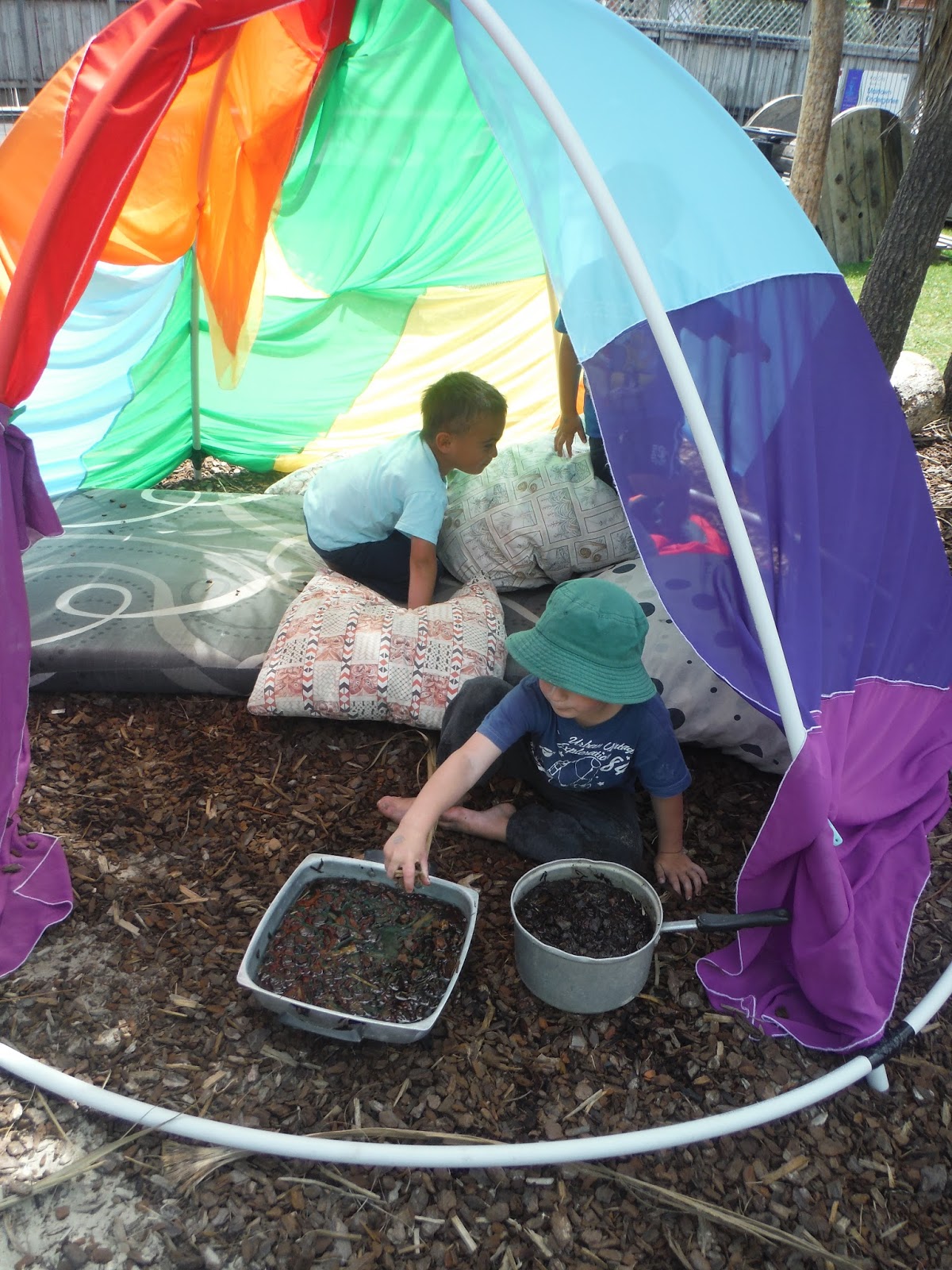
Another idea which we took from our workshop was using electrical conduit and electrical tape to make light weight, easily moveable huts. Thanks to Scott Electrical Whangarei who donated the conduit we have been able to make two huts. These have proven to be popular with the children. One is smaller and is in our sandpit at the moment. We find children playing within the hut and although it doesn’t have any ‘walls’ it seems to outline a special place for children to take ownership of.


Our other conduit hut is bigger and has been used in a number of ways, often having a cover over it which makes it a space were children meet and play. The huts can easily be moved by the children, making their play with it more interesting and fun. Both constructions have added lots of value to the environment that we provide for our children.

Kable (2010) beautifully reflects on creating special spaces for children by saying “Spaces to pause, spaces to hide, spaces to meet, small spaces; secret places: children love to have nooks, crannies, cubbies and places to kick back and relax in their play spaces.”
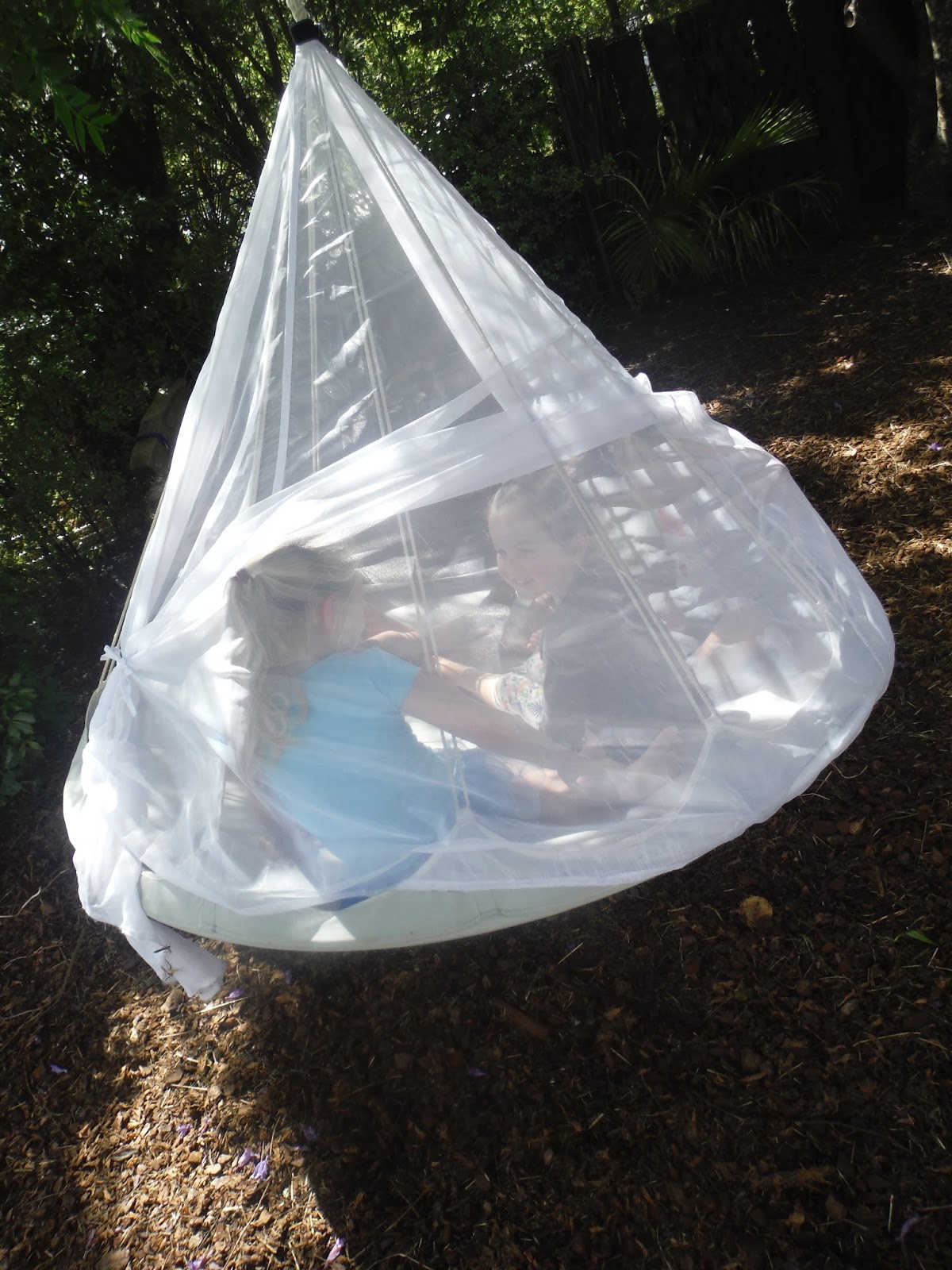
Here are a few of the other small, protected and enclosed spaces that we have at Mairtown Kindergarten.
Tee Pee


Bed Swing
Hammock

Mosquito Net
Family corner
We look forward to watching the children from Mairtown Kindergarten interact with all the small enclosed and protected spaces. As a team we are committed to providing our Mairtown Kindergarten community with a learning environment that fosters children's development in a holistic and meaningful way. This is just one small snippet of the thoughtfulness that goes into our work.
Kindest Regards,
Zair
"Children’s well-being, safety, learning and social development, as well as their essential enjoyment of childhood, are affected by the extent and the quality of their opportunities to play. By the same token, the cooperation of many different professionals and roles is needed to ensure a cohesive and effective approach."
(Shackell, Butler, Doyle and Ball)


Translate