Haere mai! Welcome to Mairtown Kindergarten's blog.

Nau Mai Haere mai. Welcome to Mairtown Kindergarten's blog.


21 Princes Street, Kensington, Whangarei, New Zealand

Phone: 09 437 2742

Email: mairtown@nka.org.nz

Monday, 27 August 2018

Sharing our wider worlds


As a team, all teachers within the Northland Kindergarten Association use the teaching inquiry approach to ensure we are committed to our own ongoing learning journey. This means that we each develop a question which we seek to answer in order to provide enhanced outcomes for children and their whānau. My current inquiry question is; How can I support children to develop a strong sense of identity so that they grow and develop with a secure knowledge of who they are in the context of their position within the wider world?


In our philosophy statement at Mairtown Kindergarten we state that we believe that everyone in our learning community is beautifully unique and has a wealth of knowledge, which we love to honour.

As a teaching team, we recognise that a lot of this knowledge is developed outside of Kindergarten – from an array of experiences with family and in the wider community which contribute to their own culture and ways of being.

One of our challenges as teachers is to ensure that this knowledge and this culture is able to shine through and be seen, heard and honoured within our Kindergarten environment for every child. As Te Whāriki reminds us, children learn and develop best when their culture, knowledge and community are affirmed and when the people in their lives help them to make connections across settings (Ministry of Education, 2017).

Term breaks are a time when our children are able to unwind, rest and refresh from an often busy term of learning and playing, but they are also valuable because our children are at home with whānau, having rich experiences beyond what are on offer at Kindergarten, relevant to their own family culture and values.
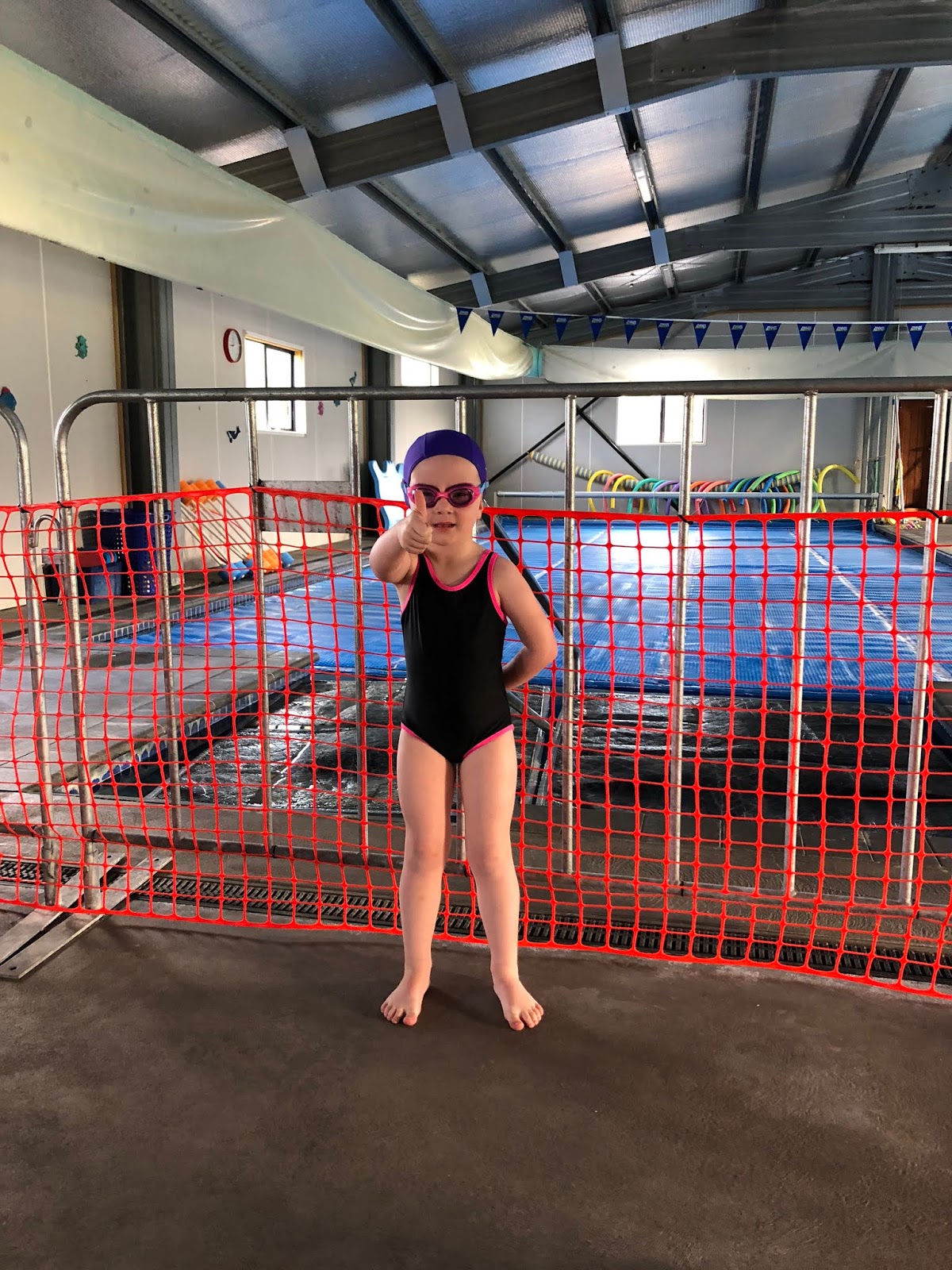
Bella at her swimming lesson

Jayden having a ride in a big red truck

On their return to Kindergarten they are often alight with excitement about the things that they have been doing during this time. This provided the opportunity for us to introduce a “whānau news” space within our environment, where photos of children outside of Kindergarten can be displayed for others to see. “Children experience an environment where connecting links with the family and wider world are affirmed and extended” and “children become increasingly capable of making connections between people, places, and things in their world” (Ministry of Education, 2017).

Grace has been busy driving a digger!!
"We're building a room for Grandma Dot and Aunty Rachel. There is wet concrete and dry concrete" - Grace

Charlie has been out on the harbour in his Grandparent's boat


This initiative has had a ripple effect within our Kindergarten community. Before we even had a chance to get this information out to our parents by email or newsletter, we had parents approaching us to ask “What is this photo thing the children are talking about?”. Children were going home and sharing with their families in the evenings some of their friends news, excited about commonalities they had found with their peers, or something new they had seen in the photos.


Before we knew it, this little ripple had turned into a river of photos! We had to expand the space we were filling and use both sides of the board. Receiving this kind of support from our whānau was beautiful, encouraging and not only was our photo board full, but our hearts were too.

The photos we received were a spectacular array of moments, captured on camera. They ranged from overseas holidays on planes, exploring within Aotearoa, trips to local parks, museums and attractions, baking at home, playing in the garden, spending time with family, and some “firsts” to be proud of. All of these photos were taken in with interest and appreciated equally by our tamariki.

McKenzie's first time holding a chicken - this was a very courageous moment for McKenzie which the children and teachers have all celebrated alongside her!
"That's me holding a chicken at Heidi's place. Heidi held the chicken and Mummy gave it to me but it was nearly going to get down!" - McKenzie
Charlize (R) with her big sister on Mt Ruapehu. Charlize noticed that I had displayed a photo of my family also visiting Mt Ruapehu and sledding in the snow.
"I love your family Amy. You go'd on the snow with me! We made a snowman and went sliding" - Charlize 

Florence and Taikura made some amazing connections through this picture of Florence at home at her art desk
Florence: Look I'm doing art
Taikura: I go to Florence's house and I paint with her
Florence: Yeah Tai-tai went to my house. My art desk is from Nan Jan and Dida


Taikura: (pointing at another photo) Hey look there's Ferny!

Florence: Do you know, I saw Ferny at hockey? 

Taikura: Florence, do you know, my Dad said you are going to play hockey at my house!

  
For some of our children this was turning into a daily ritual; checking the board for new photos, helping to add new photos, deciding how they should be displayed, pointing out their friends and themselves, sharing their knowledge of their own photos and their friend’s photos too.

Although the board is positioned in quite a bustling thoroughfare area of our Kindergarten, it has not been unusual to find children huddled around the board deep in discussion, to the point where they have dragged chairs over and made themselves entirely at home. These opportunities to engage in meaningful conversation are treasured at Mairtown Kindergarten as we believe that languages develop in contexts where children have a need to know and a reason to communicate.


One of the more interesting observations we have made as teachers, is that the children are not necessarily focussed on their own pictures. They are taking great joy in pointing out their friends, noticing what others have been doing, recognising family members of other children, and describing how they think their friends are feeling in their photos. This move away from a self-centred view of the world, shows that our children are developing strong skills in empathy and caring for others.

Friendship is born at that moment when one person says to another: ‘What! You too? I thought I was the only one' (C.S. Lewis) 


Sharing a part of themselves can be an emotional risk for children, allowing their peers and teachers to see and understand a part of their lives which is outside of the Kindergarten environment. Developing the confidence to have a strong vision of themselves and a knowledge of what they stand for is a very positive experience. This is true for our tamariki, but also for us as teachers!

No significant learning occurs without a significant 
relationship (James Comer)

When we open up and share with each other, our relationship and understanding of each other deepens, and we are better able to act with empathy and understanding towards each other on a daily basis, as well as extend and challenge each other in appropriate ways.

Having the opportunity to articulate their culture, their family and their experiences within a safe space strengthens the vision a child has of who they are, their identity and their place in the world.

Kā tu ana ratou, ka ūhia rātou e ō rātou tūpuna
Where they stand, they are clothed by their ancestors


Hei konā mai, 


Amy 

Monday, 13 August 2018

Nature Programme - Thank you to COG's and Fonterra Grass Roots Fund


Our Nature Programme has been a successful part of our kindergarten programme since July 2011. It is something that as a team we highly value and know that by providing this initiative there is a very positive flow on effect for the children and their whānau. It is a forward-thinking initiative and we are very proud to be able provide this service for our kindergarten community.


“Good for nature, good for you… And it’s a reciprocal relationship because as important as nature has been shown for our health and happiness, our interactions with the natural world are just as important for protecting nature and the environment…If we can help people to connect with nature, that’s not just good for them, its great news for nature….The more people that care intrinsically for their local environment and value the positive impact it has on their own lives, the more they’ll want to protect it from destruction. (Cloes & McRobert, 2016)


We are lucky to have such great support from our attending whānau and we are thankful that collectively as teachers we have a team that value this programme immensely and make sure that it’s something that we can maintain for all the children who attend Mairtown Kindergarten. To make this programme successful we do rely on funding to cover the costs of things like the wages of our Nature Programme Coordinator and to purchase wet weather gear so that the children and teachers can immerse themselves in this all-weather programme.


We have been lucky enough to be supported by the Community Organisation Grant Scheme (COG’s) for the last few years and this week we were really excited to find out that once more they are granting us funds to help cover the cost of our Nature Programme Coordinator. Sarah has been in this role for quite a number of years and she is such a gem in this role. Please check out our previous blog post about Sarah and the role she plays in our Nature Programme here, "Sarah,our beautiful Nature Programme Coordinator". This grant means a lot to our kindergarten community and it allows us to continue for another year to offer rich learning experiences for our children, for their whānau and for the teachers in our local ngahere.


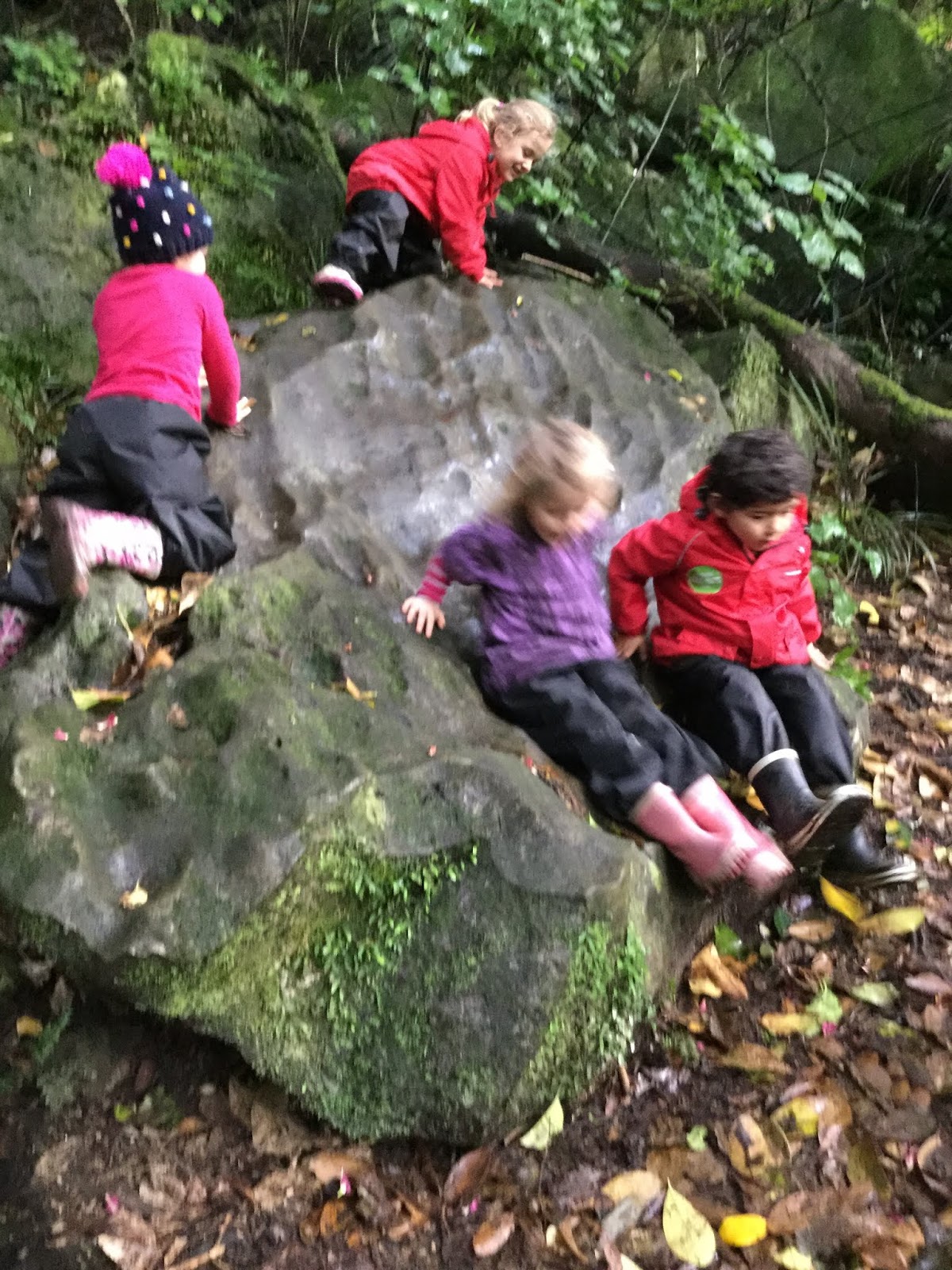
This year we have also been lucky enough to have received a grant from the ‘Fonterra Grass Roots Fund’ to purchase new wet weather gear for the children and wet weather jackets for the teachers. At the beginning of this term we were able to try out our new gear for the first time on the Nature Programme. Being able to provide appropriate clothing for the children is so important. It helps make this programme inclusive and it also makes sure that the children can engage and enjoy what the natural environment has to offer in meaningful way.


“There is no such thing as bad weather, only inappropriate clothing” (Ranulph Fiennes)


Having the right clothing is so essential to explore the beautiful bush and all the exciting things that it has to offer. When we have wet weather gear on, even on the sunniest of days, it allows us to sit on the damp ground with no worries, it means we can go bum sliding in the mud while still staying ‘mostly’ clean and it allows us to play in the rain while staying warm and dry. Having wet weather gear is vital to our programme's success.


We believe that by providing this programme our children are able to have amazing experiences week after week in our 'back yard', and we are also creating many opportunities for them to develop their eco-literacy and sustainable thinking. This, we feel, is one of the most important and significant experiences that we can offer our children and whānau at Mairtown Kindergarten. We are supporting the children in building a great appreciation for nature and all it has to offer and encouraging them to think carefully about how they can look after our environment now and in the future.


"Effective environmental education programmes need to be personally relevant to the everyday lives of children and youth, and what is in their ‘own backyard’. It is important that programmes are directly related to the local context and give learners a chance to ‘explore and experience what’s around them’. Environmental educators need to reintroduce learners to their local area by exploring and experiencing it, by learning about it and celebrating it. By doing so, environmental educators help learners develop a sense of wonder and a sense of place." 
(Department of Conservation NZ, 2011)


We can’t thank both COG’s and Fonterra Grass Roots Fund enough for their support and we are truly grateful for the grants that they have gifted Mairtown Kindergarten this year. We are so delighted that we can continue to offer this fantastic programme for our community.


-Ko te whenua te waiu mo nga uri whakatipu-
The land will provide sustenance for future generations

Nāku noa, nā,
Zair


Monday, 30 July 2018

Kindness in our Hearts

Much of last term we started looking at the book ‘In my heart – a book of feelings’ by Jo Wilek. This is a beautiful book and a wonderful way in which to explore emotions and feelings with children. The book tells the story of a little girl whose heart experiences many different emotions, and tells us: 
Sometimes my heart feels like a big yellow star, shiny and bright.
I smile from ear to ear and twirl around so fast,
I feel as if I could take off into the sky.
This is when my heart is happy.

Happiness, sadness, bravery, anger, shyness are all emotions the girl in the story explores because…our hearts can feel so many feelings! Some make us feel as light as a balloon, others as heavy as an elephant. 


When we first began to explore this book, we talked about the range of emotions this girl was feeling, how they physically affected her, and how her heart responded to each one. No doubt, because of the thoughtful yet direct words alongside the illustrations in this book – all the children at Mairtown could easily relate to this girl and started to share some of the ways their hearts have felt happy, sad, silly, angry and so on.

Exploring the different emotions that we all at some point feel, is an interesting topic to work on with children. For instance all of us at times feel angry or frustrated, sometimes we may feel shy or at times sad, and I believe it’s important for children to know that these emotions are normal; this is what it means to be human, it is how we deal with these emotions that is important for us.


Using this book as a provocation lead to many interesting conversations with the children. As I often do, I also invited the children to explore this topic of emotions using the language of art. Many drew hearts and narrated their words to me, whilst others drew moments in time that had made their hearts feel a particular way. 

Talking about our emotions is a topic many early childhood centres often engage in, as early childhood is when children begin developing their social and emotional skills, which leads onto  influencing their mental health and well-being, both now and in the future (Kidsmatter)


Children learn the meaning of emotions; what they feel like, what can cause them, how to understand and express these feelings and how to analyse social situations, all through the important relationships in their life's including their whānau and caregivers, family friends, their peers and their early childhood teachers.


In these early days at kindergarten, we explored the book as well as exploring our own emotions. The book certainly acted as a positive role model to support the children’s understandings and use of emotional language. As we worked in small groups sharing experiences and emotions that made our hearts feel a certain way, I could see how this work was providing a safe way in which the children were able to look more carefully at some of their own emotions; at what they have felt, of what they are feeling now, or of how certain things have made them feel in the past. Naturally, as we all shared some of these emotions, we talked amongst ourselves about ways in which we can handle and manage more emotionally difficult situations. For many of our children some of these more difficult situations are big challenges for them; feeling of sadness as they say goodbye to mum or dad in the morning or dealing with a friend leaving for school, feelings of frustration when they can’t quite succeed in a task yet such as swinging yourself or getting across the monkey bars, or feelings of excitement when playing a favourite game or thinking about your upcoming birthday.


Here are some of the ‘heartful’ emotions that our children were able to recognise and identify.

Senushi: My heart can feel helpful, like today I helped you and I help my sister tidy up the playroom and it made her heart happy.
Max: Once my heart was scared when I saw a really scary crocodile and when I think about ghosts.
Ezra: Max that would make my heart feel scared too. When things creep outside and go boo at night time, that makes my heart feel scared.
Taikura: My heart doesn’t feel scared at night time, it just feels tired.
Kaia: When I go to bed my heart feels calm as mumma reads me a story on the couch.
Ezra: When my daddy tickles me I laugh and that always makes my heart feel giggly.
Charlize: When I was at home my heart felt angry because mummy growled at me, cause I growled at her first! Then afterwards my heart felt happy when we were friends again.
Riley: My heart can feel proud, like when I go up Parihaka cause its hard.
Lilly: I have had an excited heart. Trips make me excited, like the dairy, like Lucas’s school. And Christmas and having a sleep over.
McKenzie: I have drawn my happy joyful heart. My little sister makes me feel happy cause she plays with me lots. Hers be the mummy and I’m the little baby.
Olivia: Mine is a love happy heart and it has a rainbow inside. It makes you happy when you love things. I love mummy, daddy, Sienna, my cat and my guinea pigs.
Charlize: I haven’t had a broken heart, but I know you can have them.
Max: Yes, its gets broken when you say bad bad words. That’s why teachers are teachers.


For most of us, including many adults, it can take years to learn to recognise the feelings we have inside our bodies, and of course how to react to these – either with good emotions or less positive ones. I know that even as an adult, I can feel new emotions at times and have to figure out how to safely cope with these feelings and how to express them. Emotional competency often matures with age, but even at the young age of 3, 4 and 5, it is very important to start dealing with feelings in a positive way by discussing what an emotion is, how you feel at moments in time, and how to handle those in a positive way for the rest of our lives.

By valuing your children’s emotions, you are teaching them that their feelings matter (C. Cox)


As we worked on the feelings our hearts encountered as well as our art work to represent some of these emotions, there were three key points we all reflected on when sharing our stories.  Working together we all helped, when needed, to identify the feeling someone may have felt; were they, for instance, happy, sad, mad or excited?  We talked and tried to explain this emotion to others, so they could put themselves in our shoes, and understand what that was like and that there is no right or wrong way to feel during a situation. For example, ‘If I am happy I feel like smiling, when I am excited I like to spin and dance’. And finally we looked at how to express these feelings from our hearts. When feeling mad, we can run outside on the grass to get rid of some of the energy we have, or we can take deep breaths to help calm us down.

‘Studies have shown that having a high emotional quotient – that is being able to understand one’s own feelings and the feelings of others and having self-control and being able to control one’s own emotions – is an important component of success in life’ (Lee, 2017)


Naturally over time our work moved on from the feelings our hearts can experience to thinking about one particular characteristic – that of kindness.  This happened as children talked about gestures their friends had done that were kind, and made their hearts feel happy. Alongside that we also introduced the children to the interactive book ‘Oat the Goat’ (an initiative launched by the Ministry of Education – see here) which highlights the importance of being kind to one another. 

The children continued to draw different pictures expressing emotions, and moved onto drawing some stunning heart pictures as we explored the question ‘What does it mean to be kind?’.

Kindness is a simple eight letter word that has the extraordinary power to make the world a better place (source unknown)


As we worked we shared our views on kindness, and as a teacher I believe it is important to practice what I teach by inspiring the children to share their kindnesses with one another and to spread kindness wherever they go.

At Mairtown all the teachers show kindness by listening to everyone, by being friendly, supportive and encouraging, by being sensitive to the needs of others, by role modelling respect and trust and by nurturing positive interactions with the children. Kindness has certainly been spreading throughout our environment, children are gifting pictures to one another, taking the time to recognise when someone is in need of a friend, pushing someone on the swing, helping someone who is hurt – there are so many beautiful acts of kindness it would be hard to list them all.

Here are our children’s views on kindness and what it means to them:

Max: Kindness means to be loving and caring.
Awhina: And to be sharing.
Adeline: And pushing (on the swing).
Senushi: Being friends is being kind
Awhina: And talking, you can talk with kindness, we can say please, like ‘please can I have the paint’.
Max: And saying ‘Are you all right?’, it means using good words as kindness.
Freya: Kindness is to say ‘Come and play with me?’, that’ll make them have happy hearts.
Amelia C: And you have to listen to people.
Thorfinn: You can say sorry too, like don’t throw sand and if you do you can say sorry.
McKenzie: And if you see someone sad we be their friends, and if they don’t have any stuff at kindy we can show them where it is.

‘Kindness in words creates confidence. Kindness in thinking creates profoundness. Kindness in giving creates love’ Lao Tzu


Hei konā mai,
Christine


Friday, 20 July 2018

Congratulations Zair

Before the new term begins this coming Monday, I thought I should celebrate some good news with our community and whānau. Tonight (Friday 20th July) the Northland Kindergarten Association held their annual appreciation evening and Zair was awarded a Kauri Scholarship to attend one of the 5-8 day outward bound courses focusing on leadership – well done Zair J


For those who would like to know more click here for a link to the outward bound website. 


The outward bound website states,
'Our focus lies in building transferable skill and attitudes that remain far beyond a participant's time with us. Lessons learnt are applicable to work, study, home - and they last for life.'

Zair was away for the awards, so the rest of the Mairtown team were more than happy to collect it on her behalf.


Zair is an amazing teacher and certainly one of a kind. She has a caring heart, is passionate about the early years, is a great leader, and is most certainly an inspiration to all of us  -  we are all so very proud of her! Well done Zair we know you will be fantastic and that you will use this experience to enhance your practice further through this leadership opportunity.

Ngā Mihi nui,
Christine

Thursday, 19 July 2018

Nature kindergarten published research

In 2015 the Mairtown teaching team were fortunate enough to be able to take part in some research on Nature Kindergartens through La Trobe University, Australia.

Of course,  and as everyone will know, the whole of the Mairtown Kindergarten team really value the nature programme that we run for our oldest 10 children. It is through our nature programme, that we have seen the benefits our children gain. For instance resilience, sensory exploration, creativity, learning about our community and developing a relationship of love and respect for mother nature herself.


We do not see nature with our eye, but with our understandings and our hearts (William Hazlitt, 1859)

We were delighted to hear that this research has been published in the International Journal of Early Years Education.

For anyone wanting to access the article, please click here 

A big thank you to Leanne Grogan for allowing us at Mairtown Kindergarten to be involved in this research and for giving us the opportunity to share this enormously important work.


When children see that you wonder about and care for living things, when you marvel at a flower or a sunset or the moon on a particular night, that gives them a respect for nature too. It’s contagious! (Fred Rogers)


Hei konā mai,
Christine 


Translate