Haere mai! Welcome to Mairtown Kindergarten's blog.

Nau Mai Haere mai. Welcome to Mairtown Kindergarten's blog.


21 Princes Street, Kensington, Whangarei, New Zealand

Phone: 09 437 2742

Email: mairtown@nka.org.nz

Wednesday, 10 April 2019

FAREWELL TO OUR BEAUTIFUL CHRISTINE

 
This week we are saying farewell to a very amazing, special person at Mairtown. Christine is off on a new adventure as a new entrant teacher.

 
 Christine has been at Mairtown for nearly 9 years and in this time has had such a wonderful influence on our kindergarten community. Saying farewell is so bitter sweet and words can’t describe how hard this moment is.
 
 
 We are so excited for Christine as she takes on her next adventure and totally understand the decision she has made to extend on her skill set and build on her professional practice. Tauraroa Area School are so lucky to be getting Christine and we know that she will absolutely shine in her new role as a new entrant teacher.
 

 We particularly admire Christine’s bravery in this situation. We know that this was not an easy decision to make. She is stepping outside her comfort zone and this in its self is so wonderful. We all know that when we step outside our comfort zone and take on opportunities and experiences that challenge us and even scare us a little, and that this is where we grow and develop the most. This is true for Christine. This is also a notion that she has instilled in many children over the years.


 Christine has proven to be an inspiration to everyone that she has worked alongside. She is so dedicated and focuses her energy on being the best teacher she can be for all the children, their whānau, the community and the NKA. Excellence is one word we would use to describe her way of being as a teacher. She also brings a great sense of fun and kindness to our space and is so supportive and encouraging to those who she works with. This is going to be greatly missed.
 

 So we would like to say a huge thank you to Christine. Thank you so much for all that you have brought to Mairtown, thank you so much for being such a beautiful teacher and colleague and also so a great friend to us all. It has been an incredible journey working with you. We are going to miss you so much but wish you all the best on your next journey moving forward.


Thursday, 21 March 2019

Mairtown Rat Trappers - Kaitiaki of Parihaka


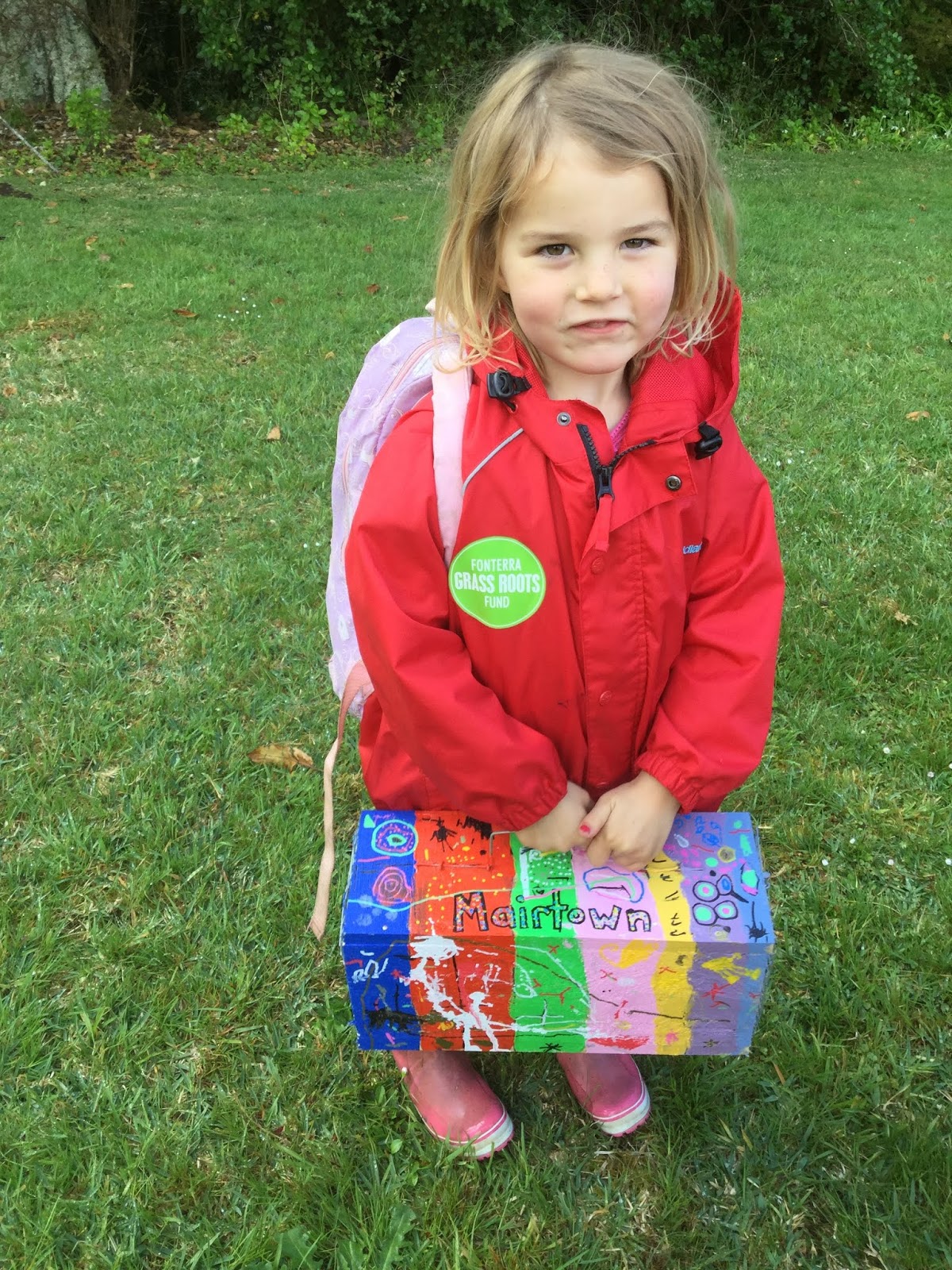
Over the past two terms we have become the kaitiaki (guardians) of two very important rat traps. These were gifted to us by Dai Morgan, through the Parihaka Community Landcare and we have placed them in different parts of Parihaka, which is where we run our Nature Programme. The children of Mairtown carefully decorated the traps before we took them into the bush so they were easily identifiable as the ones that we were looking after.


On the Parihaka Community Landcare Facebook page they state that, “We are a community volunteer group helping to protect native species in Parihaka by reducing pest populations.”

We feel very privileged that the children of Mairtown Kindergarten who attend our Nature Programme get to see first hand the efforts of trapping rats.


From the very beginning of this process the children knew and expressed a lot of knowledge of why we needed to kill rats in our local Ngahere.

“You know rats are not good, they are bad. They kill baby birds.” (Ezra)


“Yeah they also eat the eggs and when the rats kill the birds and eat the eggs that means that we might not have more birds in our places.” (Juno)

The conversations around rats and the plot to trap them has flowed into the kindergarten space. This has created opportunities for our Nature Programme children to share their understanding on this subject of conservation with other children.


Each week when we enter the bush one of the first things that we do is check the traps. If they have not gone off, we re-bait and if they have caught a rat, well that is where the real excitement begins. What I particularly like about this rat trapping initiative is how the children have taken such great ownership of the task. They clearly have a deep sense of responsibility as they rush to where the trap was last baited and eagerly await to see if there is a dead rat inside.


Now, as to date, we have only caught two rats and these were very exciting moments. On the first occasion it had been a hot summery week leading up to its discovery and to say that the rat was smelly was an understatement. The children watched on as poor Amy had the task of getting the rat out. After much discussion it was decided that the best way to dispose of the rat body was to bury it. The children, with support, chose a place that would not disturb the roots of the trees and where they could dig a fairly deep hole to place the rat in.

“This is really going to make me have a spew!”


“The rat was alive, now it is dead. So we buried it.” (Felix)


Our kindergarten is on the Enviroschools journey and this is just one of the many ways that we incorporate its kaupapa into our programme. Every pest caught is of benefit to our native species and we love that the children at Mairtown Kindergarten can have such a rich and meaningful learning experiences in regards to this. 


 One part of the Enviroschools kaupapa is 'Identifying and Strengthening Community Partnerships/ Mahi Ngātahi’

and they state that, "Your centre (or kindergarten) is part of an eco-system, and creating a sustainable centre involves developing projects and practices that support the whole living system around you. To work in this holistic way, it is necessary to bring together a range of different insights and skills. Genuine partnerships involve identifying shared goals and appreciating particular skills, resources and expertise that different groups and people can offer. Link up with others in your area that are working towards a more sustainable environment in areas such as health, conservation, cultural or community development."


Our children are learning so much about the importance of pest management, as well as contributing to our local community in a very relevant and meaningful way. We love that this is now a part of our Nature Programme’s rituals every week and can’t wait to catch more pests in Parihaka.


Thank you to Dai Morgan, Parihaka Community Landcare and the Northland Regional Council for having such a great initiative in place. If you would like to know more about how you can be involved in programmes like this check out their Facebook page (Click Here).


Nga mihi,

Zair

Tuesday, 12 March 2019

Wheel-a-thon fun 2019

On Thursday the 28thFebruary, after lots of anticipation, we held our annual Wheel-a-thon fundraiser at the Kensington park courts.  After last years rain, this year we were delighted to see the sun was out and the sky was a beautiful blue.


As everyone arrived, it was wonderful to see so many of the bikes or scooters had been decorated thoughtfully with balloons, tinsel, streamers, windmills, ribbons, plants and flowers.  Many of our children didn’t stop there though, also choosing to decorate themselves, with some wearing fantastic dress ups.

At Mairtown Kindergarten we love to bring our community together. Community events like the Wheel-a-thon provide an excellent opportunity for whānau and families to engage with each other, to meet new friends and to socialise outside of kindergarten.


“People coming together as a community can make things happen”  Jacob Rees-Mogg


When I asked the children what they enjoyed most about the Wheel-a-thon the following day at kindergarten, there were two popular responses ‘Eating my ice block’ and ‘seeing my friends’.  The ice block certainly was a refreshing way to cool down after completing many laps of the courts in the hot sunshine.  As well as receiving an ice block, each child received a badge acknowledging their participation, one child commented ‘I love this badge, I’ll keep it forever’.


"Family and friends are hidden treasures, seek them and enjoy their riches." Wanda Hope Carter


We would like to say a huge thank you to all the whānau who helped make this event such a success through offering support and help such as selling pizzas, gaining sponsorship, decorating all those wheels, and making the time to come and have fun at the event.


Below is a short slideshow movie which the children have been watching at whānau time, with so much joy on their faces as they recognise themselves and their friends riding their bikes and scooters - enjoy!  


This year all monies fundraised will go towards funding our Nature Programme co-ordinator for 2019.

Ngā mihi,
Christine


Tuesday, 5 March 2019

Playground Experts


This week we were made aware of a survey being carried out by Whangārei District Council for consultation on two local playgrounds. One very popular one which is due to be upgraded and one new playground which is planned to be created – both in central Whangārei.

We were excited to be able to present this opportunity to the kindergarten children to give their thoughts and feedback on what makes a great playground. After all, as we reminded the children, they are the playground experts!!


The current Town Basin playground which is due for an upgrade


As we came together at whānau time we were able to discuss this as a group and with the help of some visual prompting for instance photos of the existing playgrounds on our projector, there was lots of conversation and ideas being shared within the group. We gave the children time to think, reflect and mull over their ideas before talking further with them in small groups.


Below are their ideas collected over two days, with children often approaching us animatedly explaining extra things that they had thought of after having had time to process the question.

Sullivan: I like swinging on the swings. I would like a flying fox that goes wheeeeeeeeee!!!

Senushi: I would like monkey bars like at my sisters school and some swingy things that go like twirly whirly whirly until you get dizzy and swing to dizzy heights.

Roimata: What about a big long river with water trickling down and lots of room to play.

Riley: I’d like a trampoline which goes right down to the bottom and bounces right up to the sky.

Lilly: Yeah! I would like a trampoline! And something to build with.


Teddie: Yes a trampoline to the moon and a playground where you have to wear your togs. I love bouncing.

Gabrielle: I would like a swimming playground.

Caleb: A slide with corners, a giant big slide!

Gabrielle: And I would like sticks and blocks to build with and a place to have a fire at the playground to cook marshmallows.

Juno: I would like a pool park where you have to go in the pool, and you can slide down a slide into the pool.

Kelsey: I would like monkey bars.

Juno: Yeah but wooden monkey bars are better than metal monkey bars because the metal ones give me blisters.


Kelsey: Also a place to play shops.

Teddie: I would like a bat and ball to play with at the playground.

Mana: I like climbing. Trees are my favourite thing to climb and I like climbing logs.

Donna: What about a sensory garden, with smelly herbs and edible plants and small places to sit?

Nikos: I like the round thing what goes up down up down. Yeah the merry go round.

Charlie: Charlie loves to swing!


Riley: What about an octopus? A giant octopus that squirts water out.

Anna: I would like a long pink curvy tunnel slide.

Joshua: I love rope swings with big rope. Swing rope. I’ve been on one before.

Liam: A shallow pool to run through and splash, and a slide that goes into the water. A curvy slide that goes fast.


Sharlee-Bea: I like to go inside things and hide.

Carter: I like jumping on really giant big rocks.

The ideas that the children contributed were so varied and amazing! I have had fun imagining a HUGE playground environment incorporating so many interesting ideas!!

Anecdotally children are often overlooked when it comes to seeking their perspectives as “... adults consider that they have the right to make decisions on behalf of young children, or at best may view young children as citizens in the making” (Ritchie & Lambert, 2018) but this is certainly not the case.

I would like to acknowledge Whangārei District Council for making this opportunity available for the children to contribute their thoughts and ideas to this project, and for being a leader in the community in this respect. Having organisations who take the time to listen to the voices of our younger members serves to build environments in which children are recognised as active citizens, contributing both to decisions which affect their lives, as well as to their communities and wider society.


Within the New Zealand Early Childhood Curriculum Te Whāriki, the principle of whakamana, or empowerment requires that “every child will experience an empowering curriculum that recognises and enhances their mana and supports them to enhance the mana of others” (Ministry of Education, 2017, p.18). Acknowledging our children in this way is certainly affirming to the way they view themselves as part of the wider community and builds their confidence and their belief in their own ability to make a difference. 

“Strengthening skills, confidence and capacity for democratic participation during childhood will also bring lifelong benefits” – UNICEF

We are very much looking forward to watching these community projects progress and playing in the finished environments. One thing is certain – the playground designers won’t be short of creative ideas to weave into their work!

Arohanui,
Amy

** Please note, if you live in the Whangārei area and have ideas to contribute, or would like to facilitate the contribution of your own children’s ideas, the link below will take you to the Whangārei District Council Survey which is open until March 10th


Monday, 4 February 2019

Children's inquiry into endangered animals.

Our art studio at Mairtown is always a hive of activity. Although it is not an Atelier as such, we have certainly borrowed the space (set to one side and tranquil) from the preschools of Reggio Emilia in Italy. Although the spaces and classrooms from Reggio Emilia in Italy may look very different to our space at Mairtown, there are some similarities. Our art studio is a space with ‘many lives’. It is a studio for creating, a place for research, for dialogue, for challenging ideas and for discovering new learning.


By doing art, students can create and communicate new ideas (Haydock)

In this documentation I have put on offer a small collection of work from a group of enquirers at Mairtown, spanning a period of 6 months. I hope as you read this it opens a window for you into the creative world of 3, 4 and 5-year olds. As you read you will no doubt notice how the children’s ideas and wonderings changed over time, and as their teacher I had to make decisions about the resources I offered, the provocations on display and how best I could support the children so that their interests continued to grow and expand.


The story begins…
At the beginning of term 2 2018, in July I began to explore the idea of endangered animals with a group of children. This idea stemmed from an interest in animals I had been noticing for a while in the children’s play. They acted out being animals, played with animal figurines and often referred to animals such as the kiwi (endangered), dinosaurs (extinct) along with magical creatures created from their growing imaginations.


Setting up a provocation of figurines, photographs and books of endangered animals I waited to see where the children would take their thinking. The initial interest was to simply study the book. 
What animals did they recognise? 
What animals did they want to share their knowledge on? 
What were the animals doing as they were captured in their natural environments?

That’s a rhinoceros; they can’t breathe under water. (Ezra)
See, a panda, it likes eating bamboo. (Jesse)
Polar bears live on ice, they must cause that ones on ice. (Riley)
Jaguars have dots on them. Do they all? (Mana)
Asian elephants have little ears. I know that. And elephant tusks are different sizes as ones a mummy and ones a daddy. (Ezra)


Inquiry-based learning is a dynamic and emergent process that builds on students’ natural curiosity about the world in which they live (OISE, 2011)


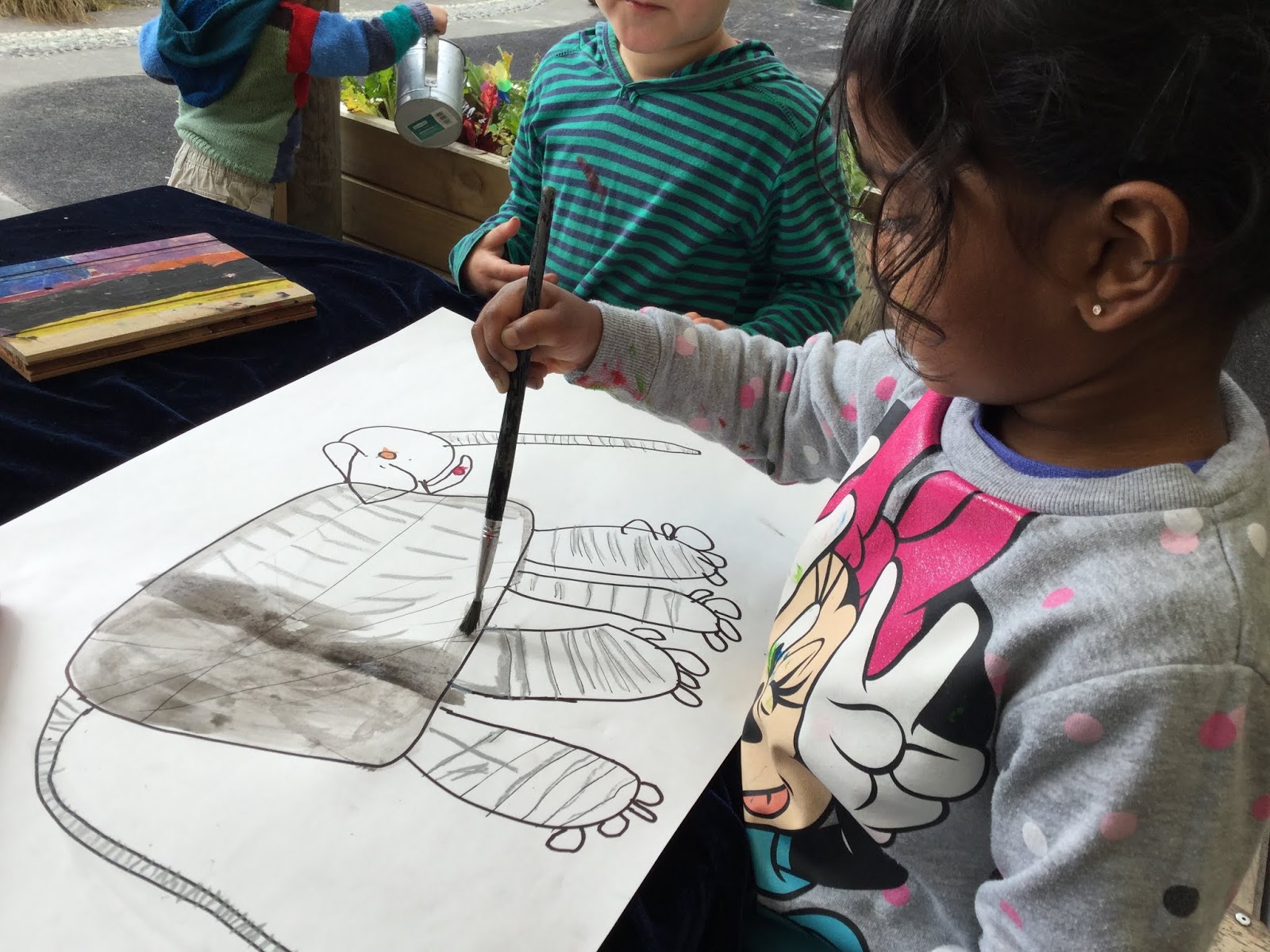
After several days of this exploration, of sharing facts, ideas and knowledge with their friends I began to suggest the children may like to draw one of these animals. Using the books and photographs as our guide, weeks and weeks of observational drawing began. The drawings were large and time consuming. The children archived their work and were free to revisit it whenever they felt the need, discussing their chosen endangered animal, describing what they saw, sharing what they knew and developing stories. We were witnessing experts in action! It is only through examining something carefully, by observing it and noticing it, that we can truly get to know it and to feel at one with it.

Ethiopian wolf: They have spots for its nose holes and whiskers. The neck is white. The tip of the tail is black and black fur and white teeth. The tongue is red and there is black, grey and white. The fur is fluffy. The teeth are so sharp; perhaps they are made of bone. (Ezra)


One of the reasons I invited the children to engage in large drawings was the factor of time. I didn’t want the children to rush their drawings as this in turn may rush their observations and their thinking. This work was about slowing down, taking time, of learning to really see and noticing details.

Tell me and I forget, show me and I remember, involve and I understand


As the children worked I acted as their scribe, recording their words which enabled me to offer back to the children their own thinking and ideas on another day, encouraging them to revisit their thinking, and to share their creative ideas with their friends.


Amur Leopard: They are yellowy orange (Matthew). It has short legs. (Riley).
There are no spots on his nose. And the ears doesn’t have spots. (Freya)

Aye ayes have nails, I see fingers. There’s pink on its nose. The middle of the eye are black. A tail like a wolf (Ezra). They look a bit like a possum. (Maxwell).


What does it mean to be endangered?
In the early days of the children’s work we explored the word ‘endangered’ and also ‘extinct’. What does it mean to be endangered or extinct? The children worked together over days, their conversations growing and growing as they assisted one another in this new learning. The children experimented with their thinking, they drew on the knowledge they already had, they explored one another’s ideas and between them came to an understanding. As I witnessed this deep level thinking I saw how the children were willing and prepared to make mistakes with their thinking and also grow their confidence in engaging in a new topic, and in new words.


Animals die when they are very old. If people died, like soldiers, we don’t see them again. That’s extinct, I think! What’s endangered? (Ezra)

Endangered means they are in danger. When they are in danger people kill them and no one gets to see them anymore. (Teddie)

Endangered means starting to die. (Maxwell)

They never come alive again. (Jesse)


Inquiry learning is not a rigid set of procedures, rather it is a mindset, one that pervades school and classroom life to foster a culture of collaborative learning and idea improvement (OISE, 2011).


All the children naturally had different interests, were captivated by different animals, and so drew different animals. As they worked on these observational drawings I began to see the beginnings of more ‘wonderings’ from the children. Juno had drawn a turtle and through a book from home was eager to share and explain to her friends what she knew about turtles and why they are endangered, opening up this lovely dialogue from a group of children working nearby.

Turtles lay eggs, but it’s good to lay eggs, but not really good cause the birds eat the babies. (Juno)
Little baby turtles come out the eggs. (Teddie)
What? Turtles lay eggs? I didn’t know that I’m going to tell my mum. (Senushi)
 Also the animals eat the bags – any animal – and then they die. Maybe they think it’s food and the turtle thinks it’s a jelly fish. In my turtle book the turtle eats the plastic and it chokes on it. (Juno)
They are so amazing. (Olivia)
I thought paper bags killed fish. (Wai Manu)
Yes they might might choke or die on paper and become extinct. (Imogen)
No, no, plastic bags. Also the other animals eat the bags – any animal and then they die. The plastics are making the trees die, because the trees eat them and then the animals eat the plastics. (Juno)
Plastic might get eaten, but paper in the sea, they wouldn’t die as worms can eat paper. (Ezra)
So, if you put plastic underwater and then it gets into its throat, and then it dies? (Wai Manu)
The turtles will die! They will die if they eat the plastic and then they’ll never be able to eat again. (Senushi)
I know. Its because we put everything down the drains and it goes to the sea. The turtles see through it and think it’s fish and they eat it and die. Are whales dying? (Maxwell)
We should kill the people that put stuff down the drain. Kill the plastic and the wood and the metal, kill it by putting them in the rubbish bin and the rubbish truck will take it to the dump, then we bury it in the ground, then they can’t come out. (Matthew)
Before it starts getting windy we could pick it up and put it in a pile and take it to the rubbish dump in the car then all the animals can breathe. (Freya)
These people are naughty, they leave it on concrete and it blows into the water. (Juno)
Some humans don’t know polluting is bad. (Imogen)


Naturally as the weeks went by and the children became more familiar with their own animals and those of their friends, as well as the term ‘endangered’, conversation turned to why the animals are becoming endangered and what we should do.

Why are animals becoming endangered, is there anything we could do?

Animals don't die if they have food and water to drink. We could feed them. (Grace)

Aye-ayes
People trap them with big nets like they trap Kea’s with. They hunt animals; they are naughty. (Matthew)
I think maybe aye-ayes are endangered because they climb up trees and fall down. They climb super high then they fall and die. (Ezra)

Great white shark
People are swimming and shooting them, that’s why they die. People can be baddies! (Liam)
Do they eat the sharks? (Grace)
I think it’s because there is no food in the south pole so they eat the sharks. (Ezra)


Over time as our work together continued, we moved to clay. It is important to note at this stage that because the children were very much in charge of their own learning, they were all at different stages of their work. Some had completed several drawings and were moving onto sculptures in order to deepen and enrich their thinking, whilst others were still on their first drawing and considering the concept of what it means to be endangered.


For those that had begun to work with the clay, more wonderings were starting to emerge and we began to consider the question, ‘If I could do anything to help my endangered animal, I would…?


Snow leopard:Endangered means they get killed. I would protect the snow leopards with a shield. We put the shield in front, so people can’t hurt the leopards. (Teddie)


Turtles: They are endangered cause they are eating plastic. Tāwhirimātea blows the rubbish in the water. I could stop them, people putting rubbish in the water. (Juno)
And we could pick up the rubbish. (Bella)
That’s naughty too, as there’s a cone in my river. So, I would stop people throwing rubbish on the ground, I would say ‘Stop throwing rubbish everywhere’. (Juno)


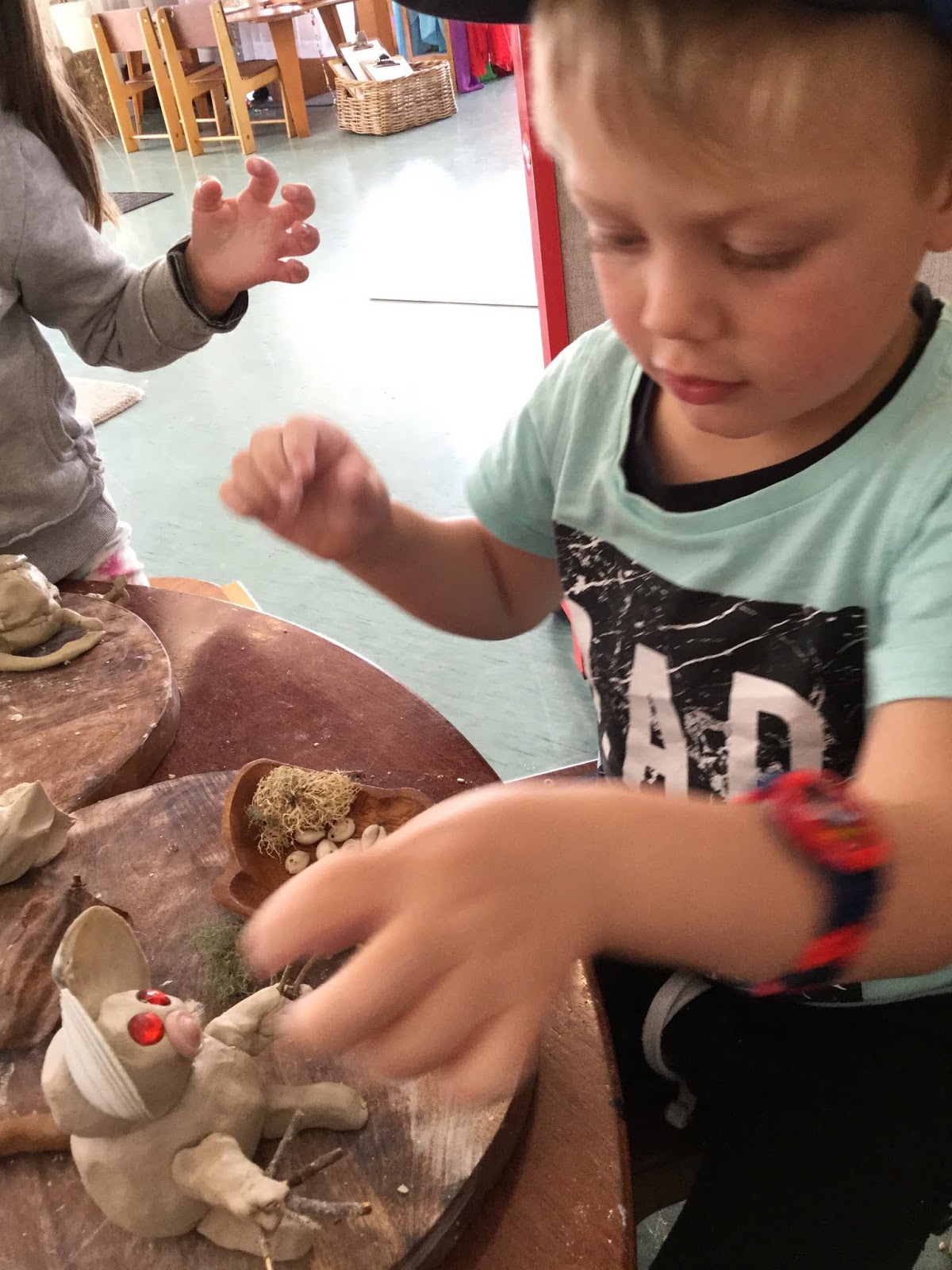
Clay is a familiar material for our children, one they have had plenty of experience and familiarity with. One of the reasons I chose to move onto using clay, a 3-dimensional material, was to challenge and support the children to make the connection between their thinking and their actions – more specifically; ‘Thinking using our hands.’


Snow leopard:We can stop them getting endangered by telling people to ‘stop’. If they don’t, we can keep the tigers and leopards away from them by keeping the tigers and leopards in another place, a different jungle. Or perhaps I could take them to the zoo and it could be saved by getting food and water there. (Freya)

Siberian Tiger: Everyone is taking all their places. I would say ‘Stop the tigers don’t like it’. And if the people say no, I would tell them they could build in Auckland. (Senushi)
And if they don’t stop, instead of taking land off the animals, they could build a tall tall tall tower. (Georgia)
Yes, I think that’s a good idea! (Senushi)


I hope as you read this you can see how the arts are an important aspect of our inquiry work with children. It is through different art mediums, drawings and discussions, that children show us the complex ways in which they consider, think and place their ideas about the world. When children draw or sculpt, they can add a whole new realm of meaning and stories to their work. They think through questions on their mind as they create, and they construct a context in which they can build and obtain knowledge. 

Art is an Interpretation of experience…Art can help us look at how we look at life…Art becomes a tool for thinking (George Forman)


You may also notice that although the children have come up, through their collaboration together, with the correct definition of ‘endangered’, and also become experts in the animal of their choice. The answers for the questions ‘Why are animals becoming endangered, is there anything we could do?’ And ‘If I could do anything to help my endangered animal, I would…?’ are purely the children’s words and thinking. As their teacher, I have supported their inquiries, but I am very mindful not to push the ‘correct’ answer onto them.  The reason being that when I teach inquiry with children, the main emphasis is always on encouraging and fostering deep thinking. I see my role as a facilitator in supporting children in ‘how to think’ rather than ‘what to think’. In the words of Ann Pelo In growing a culture of inquiry, our focus is not on teaching children information and facts, or to get them at some eventual ‘right answer’…we stay present to what’s unfolding, not trying to see into the future or make plans far in advance. Curriculum anchored in inquiry grows moment by moment, one step at a time.’ 


In addition to this, it is through fostering thinking skills in children that we can open the world for them. Children who can think creatively and divergently will be our worlds future problem solvers; as rather than being told the answers, they have been encouraged to think about the answers for themselves. Children who are thinkers will continue to grow into adults who are thinkers, gaining the skills through their thinking to be able to see lots of possible answers and many different solutions to a single problem or question. 


The development of intelligence is a matter of having wonderful ideas. In other words, it is a creative affair (Eleanor Duckworth)


Ngā mihi,
Christine

Translate