Haere mai! Welcome to Mairtown Kindergarten's blog.

Nau Mai Haere mai. Welcome to Mairtown Kindergarten's blog.


21 Princes Street, Kensington, Whangarei, New Zealand

Phone: 09 437 2742

Email: mairtown@nka.org.nz

Sunday, 21 June 2020

Tui Award


Kia ora koutou,

Inspired by professional development in November 2019 with Sir Mason Durie in Waitangi, where he discussed acknowledgement of tamariki and their potential.  This really resonated with me and inspired me to take this into my own learning and teaching inquiry.  

“Unleashing potential does not necessarily mean having all the insights and knowledge to realise latent strengths but it does mean recognising inherent talents and skills and taking steps to launch a journey where they can find full expression” Mason Durie (2006) .


This, in turn, led to a discussion as a teaching team on how we acknowledge and recognise important social skills that children are showing at Mairtown Kindergarten? 
Sometimes we see these small moments throughout our day and try to acknowledge these, but how could we promote these positive moments as a collective? 


We believe it is important to be able to acknowledge the small moments - tamariki potential (“mana moments” - Roimata McFarlane), through the promotion of guiding values from te ao Māori worldview.  
By supporting and recognising when tamariki are fostering caring and respectful relationships with each other and our environment through these guiding values.  Creating an environment where learning and development are inclusive and responsive for all tamariki Māori and non-Maori to benefit (Mcfarlane & Mcfarlane et.al 2013) . 


“Teachers can find different ways they can expose the children in their centres to the use of te reo Māori in a range of different ways, given that “creativity – unique and divergent ways of exploring and thinking - is innate to human development” (Wanerman, 2013, p.130). It is within this context that teachers can creatively build on their own ideas to find ways to incorporate tikanga and te reo Māori into their daily practice within the context of learning environments within Aotearoa/New Zealand.” (R Chaffey, M Conole, M Harrington, 2017).
\


We have an amazing rangatiratanga stamp - which carries much mana when received. This is an recognition which our tamariki aspire to and is highly regarded by the tamariki and teachers as an important award to receive at kindergarten. This acknowledges our leaders at kindergarten and we have a few. But sometimes understandably it takes a while to become a receiver of this stamp, as the leadership skills are refined and developed over time for some of our tamariki at kindergarten. 


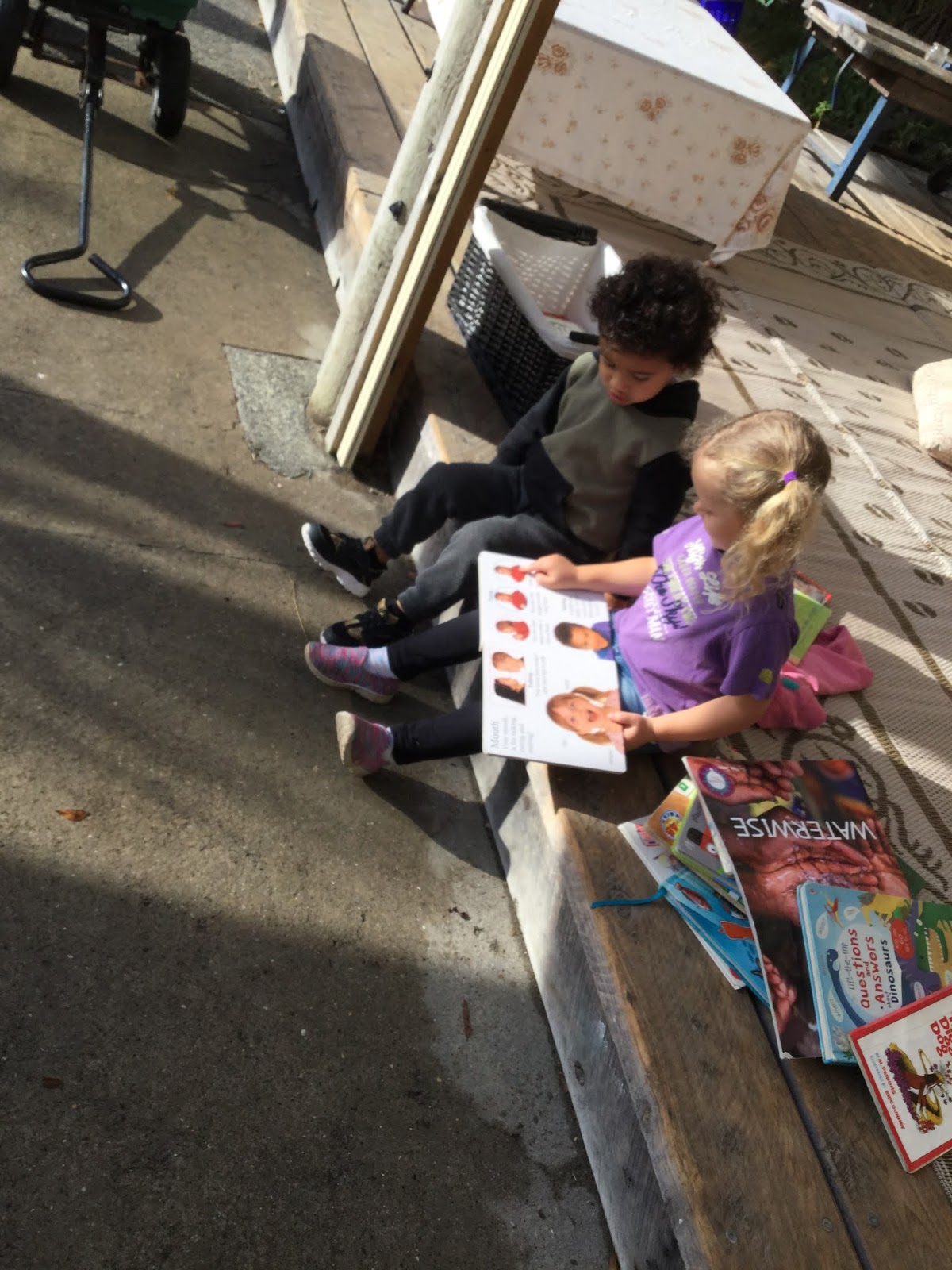
 Special moments, taking the time to read a book! 


Looking after someone who has hurt themselves 


 Letting friends know they are included!
Sharing with our friends our creations.

As parents and educators, I believe that we are continually learning alongside our children and that we have our own potential to inspire, relationships, kindness, curiosity, creativity, and collaboration. 

This is where the idea of the ‘Tui Award’ came to fruition. As a collaboration. Being able to acknowledge children's potential and empowering children to connect meaningfully to their most authentic selves and their gifts as human beings (Wright, 2020).   

At the beginning of the week, we would share with the tamariki at our whānau time what value the teaching team would be looking for.  Tamariki that were identified as showing values would receive a tui award. 


Some of the values were were looking for have been:

  Mahi tahi- Working together


  Manaakitanga - Kindness/generosity


  Kaitiakitanga - Guardianship


      Hauora - Health & Well-being


"Do not follow where the path may lead. Go instead where there is no path and leave a trail."
-Ralph Waldo Emerson

We would then share the “Moment” that a teacher had observed, (which could be over an extended period of time) or been part of why the receiver was receiving the tui award -Often these awards are coming directly from their heart, their being, themselves through the engagement and encounters and relationships they are having with others, acknowledgement of these small but so special moments.


In my first observation and recipient of a Tui Award had shown manaakitanga which came straight from her heart - showing aroha and supporting growing relationships with others.  


It seemed just as we introduced the Tui Award, Covid19 lockdown was imposed and we headed into lock-down.  Our own Prime Minister Jacinda Ardern urging New Zealanders to " be strong and be kind".    Upon returning to kindergarten after 7 weeks away due to the Covid19 restrictions, our kindergarten tamariki have all been settling back into kindergarten happily.  One thing that has stood out for me has been the fact the manaakitanga - kindness of our tamariki to each other has been so heart-warming and amazing!


MAHI TAHI / TEAM WORK!!! 


Tamariki at Mairtown have continued the kindness to others at kindergarten. As 2020 proves to be a year of many global issues. The importance of all these (mahi tahi, manaakitanga, kaitiakitanga and hauora) values has never been more of priority.

I have no doubt that our Tui Awards, now acknowledge tamariki and their potential and all those small “mana moments” that support tamariki in their social development skills which are crucial to their learning and development.


He aroha whakatō
He aroha puta mai
If kindness is sown
Then kindness you shall receive


Ngā mihi
Sarah

Thursday, 18 June 2020

The return of 'Fire Thurdays'

The creation of fire is an essential factor of a nature programme. It is one of the four elements and provides opportunities for children to experience success and self-accomplishment when starting a fire from scratch that will ultimately cook food.

After a long period in lockdown in our own little bubbles it is time to start returning to “normal” life. One thing that has definitely changed since we left is the season! We have returned to kindergarten wearing gummies, beanies, raincoats and scarves. A far cry from the togs and jandals that were once a daily essential.


With the colder season comes a weekly ritual that is very close to our hearts… Fire Day. We feel so thankful to be able to cook together again, sharing kai with others is something that we hold dear to our hearts at Mairtown kindergaten. 


Cooking is all about people.  Food is maybe the only universal thing that really has the power to bring everyone together.  No matter what culture, everywhere around the world, people get together to eat.  (Guy Fieri)


This is our ninth year of having weekly fires during the winter months at Mairtown, fondly known by the children as ‘Fire Thursday’, due of course, to the fact that we hold our fires on Thursday mornings. The benefits it offers to our tamariki include developing more confidence, safety awareness and better risk assessment skills whilst around fire.


There are obviously significant risks associated with fires, and we take very seriously our roles as kaiako/teachers to plan and manage for these carefully. Leading up to our first fire day we engage in a great deal of discussion about these risks during our morning whānau time. 


 Here, the children who were at kindergarten last year take the tuakana role in sharing with the teina/younger ones what they remember about fire day. As a group we go over every step and discuss each potential danger and the rules put in place to eliminate or minimise these risks. 


‘By implementing risky play in a secure environment as part of early learning, teachers  can ensure young children feel confident to engage with risk safely under supervision rather than on their own’ (Ariane Beeston)


Other learning opportunities for our tamariki include:
Mathematical and science concepts - Preparing a fire with paper and laying wood for a base.
Science concepts – how heat changes objects.
Cooking – with use of hand held paddles and pokers.
Ethic of care in looking after your friends.
Health and safety and how to manage risks.
Working together as a collaborative community.
And most importantly children learn an awareness and respect for fire.


So what does fire day actually look like at Mairtown kindergarten!?

We begin by preparing the kai whether it be bread dough, sauasages, pancake mixture or marshmellows. At present the food preparation is done by the kaiako due to Covid-19 precautions. 


Preparing the fire. The tamariki have great expertise and knowledge of what is required to get the fire going. There are always keen helpers to scrunch the newspaper, and stack the kindling ready for the teachers to light.

One last discussion at whānau time provides an excellent opportunity to share ideas about how to be safe around the fire.  We actually bring our fire (not lit) inside onto our mat, prior to fire day where we get our children to role model how to keep themselves safe around the fire. Important rules that we have in place are:

"No scarves, no capes, no tu-tu's and NO swapping seats" - Alena


"No toys around the fire" - Kelsi


"Sit and down and be sensible or you will be sent away and you have to hold the paddles with two strong hands" - Amalia


"Stand behind the safety bubble" - Finlay

"You can't go by the fire until there are two teachers outside" - Issy


Sometimes once the fire is lit it can take a little while for the fire to heat up enough to start cooking.  These times can provide the perfect opportunity for our children to practice patience, while they wait for their turn to cook.  It is a valuable lifelong skill to learn patience and know that they will eventually get to cook. 


 Childspace explains Patience is about waiting and having confidence in a positive outcome.  When we are patient we are able and willing to suppress restlessness or annoyance when confronted with delay.  We work with quiet, steady perseverance and diligence.


When the fire is ready the tamariki are passed the paddles. The kaiako then place the kai on the paddle and step back as the tamariki cook. Once cooked the kaiako take the kai off the paddle, and hand it to the child once they have passed their paddle to another child.  They then take their kai to the stairs to sit and eat, yum!


It really is magical, sitting around the warm fire on a winter’s day, watching as the flames flicker and dance, the smoke twirling in the breeze. What could be better than chatting and cooking delicious kai, side by side with your friends, creating many new memories and skills for lifelong learning.

Nga mihi,
Hanna Bramley

Translate