Haere mai! Welcome to Mairtown Kindergarten's blog.

Nau Mai Haere mai. Welcome to Mairtown Kindergarten's blog.


21 Princes Street, Kensington, Whangarei, New Zealand

Phone: 09 437 2742

Email: mairtown@nka.org.nz

Friday, 29 July 2022

Movement, Physical Development, and Risky Play


“Just like reading and writing, children have to learn how to move”.


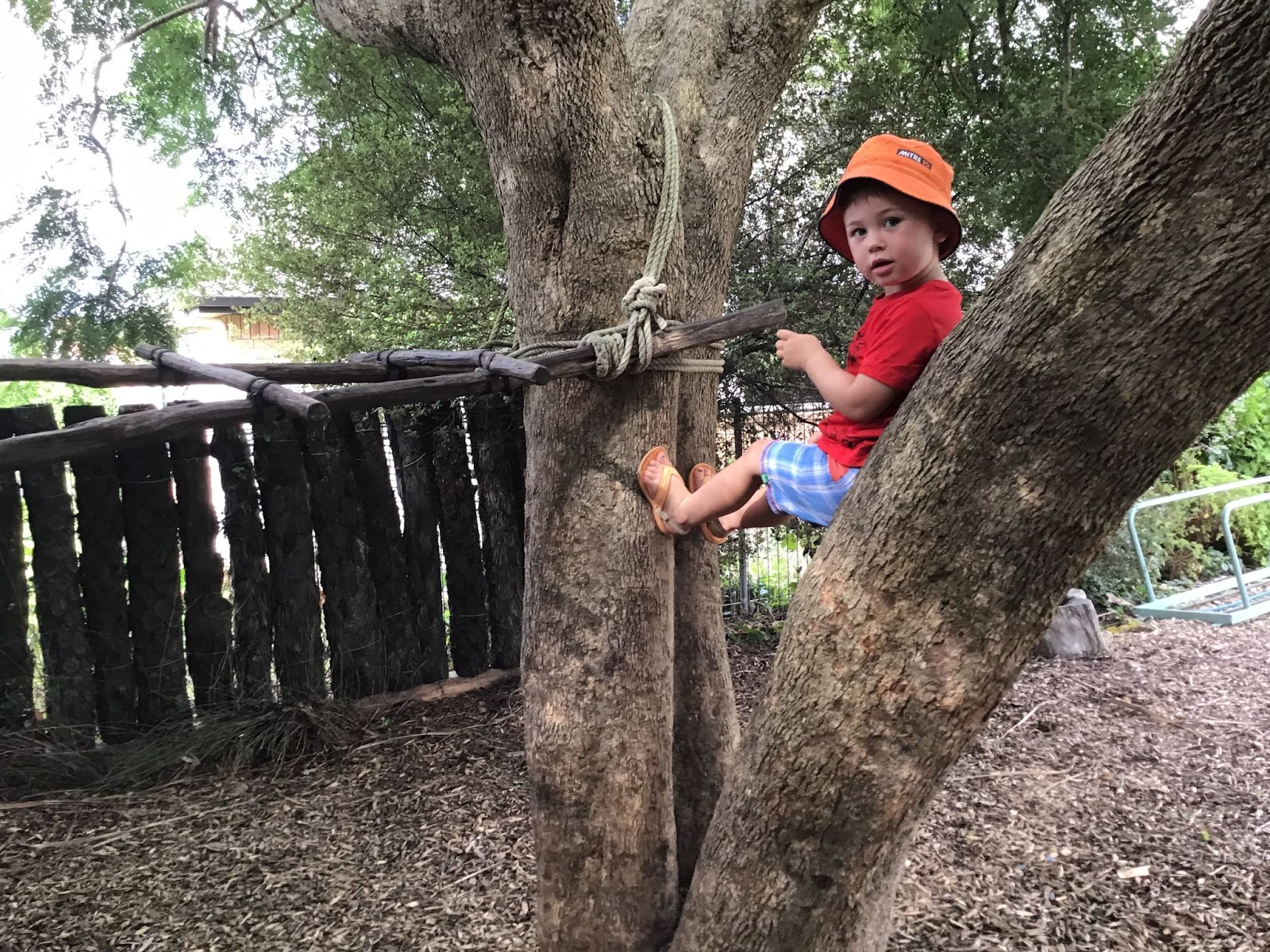
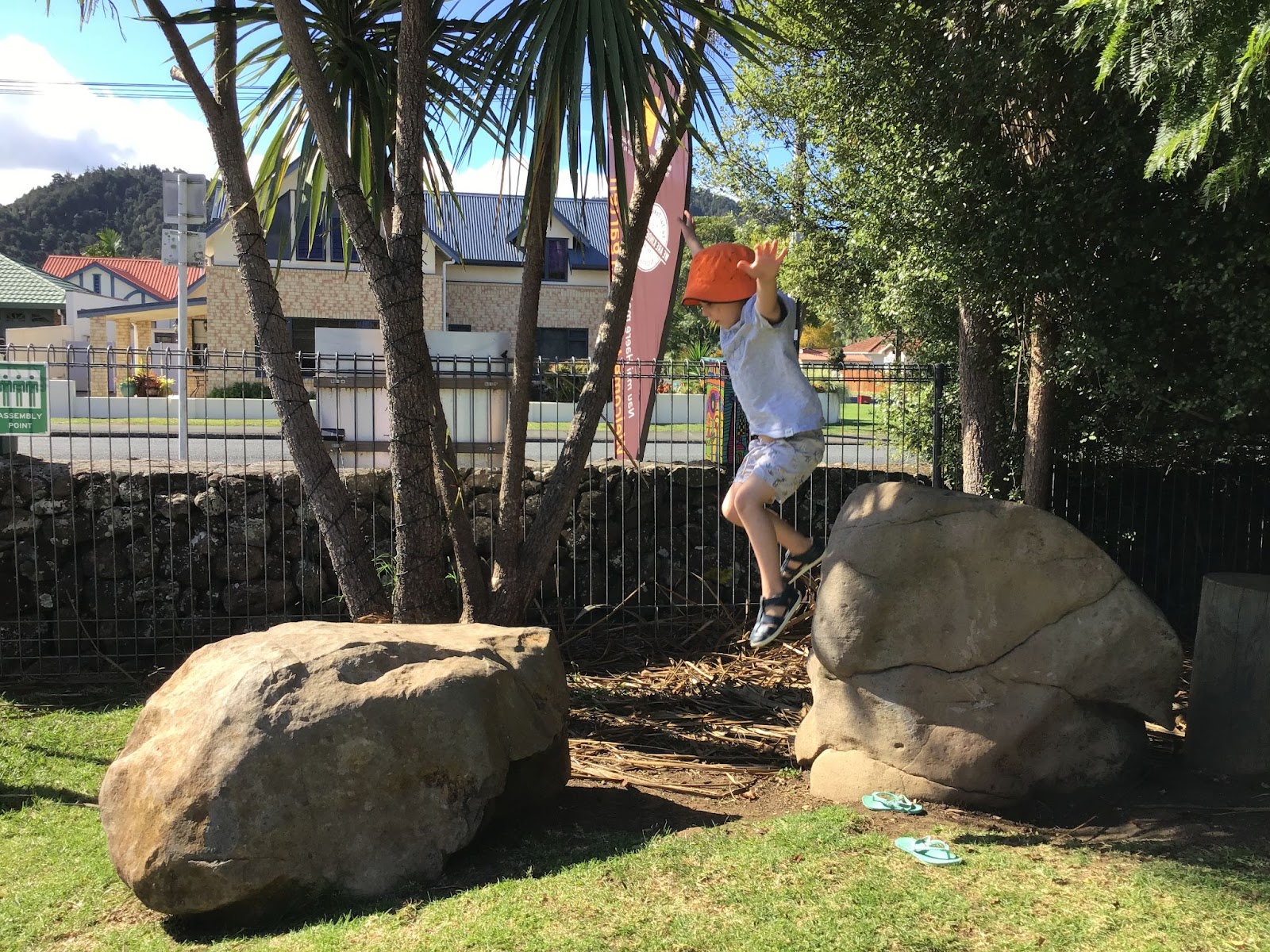
After reflecting on the learning taking place this term at Mairtown, a big interest is in physical play and risky play. Our children have enjoyed testing their physical capabilities, pushing their limits in what their bodies are capable of, and learning new skills. With the different ages, abilities, and skill levels within our kindergarten, this is an interest that has been expressed by many of our children in a range of different ways.


A good way to look at/set up an environment is to consider the following, sensory, balance, intuition, power, coordination, and control. Having an environment that supports all these will help children develop different skills, (Gill Connell).

Physical play is an essential part of children's development as it is a vessel to acquire many different skills and abilities. This can be seen in many different forms from swinging on the monkey bars, jumping off the A-frames, hanging upside down on the flying fox, balancing on a tight rope, or running around playing tag. Our role as kaiako is to recognise what children can accomplish on their own and find ways to support children to extend what they can already do. “Kaiako appreciate the importance of children exploring and testing their physical abilities by engaging in adult-supported risk-taking play”, (Ministry of Education, 2017).


Physical play allows children to develop their gross motor and fine motor skills. The development of gross motor skills is bigger muscle movements. These are used for learning to crawl, stand, walk, run, jump, and climb. Developing gross motor skills is important for developing other skills such as balance and coordination. Once children have developed gross motor skills, they start developing fine motor skills, and smaller muscle movements. All this work supports them in learning to manipulate objects and develop hand-eye coordination. These skills help a child's ability to do more complex tasks such as writing or dressing themselves. An environment that supports physical play therefore enhances skills which will have lifelong benefits.

The increased motor competence and confidence that children gain through these experiences are likely to contribute to physical fitness and ongoing engagement in physical play, (Helen Little, 2019).
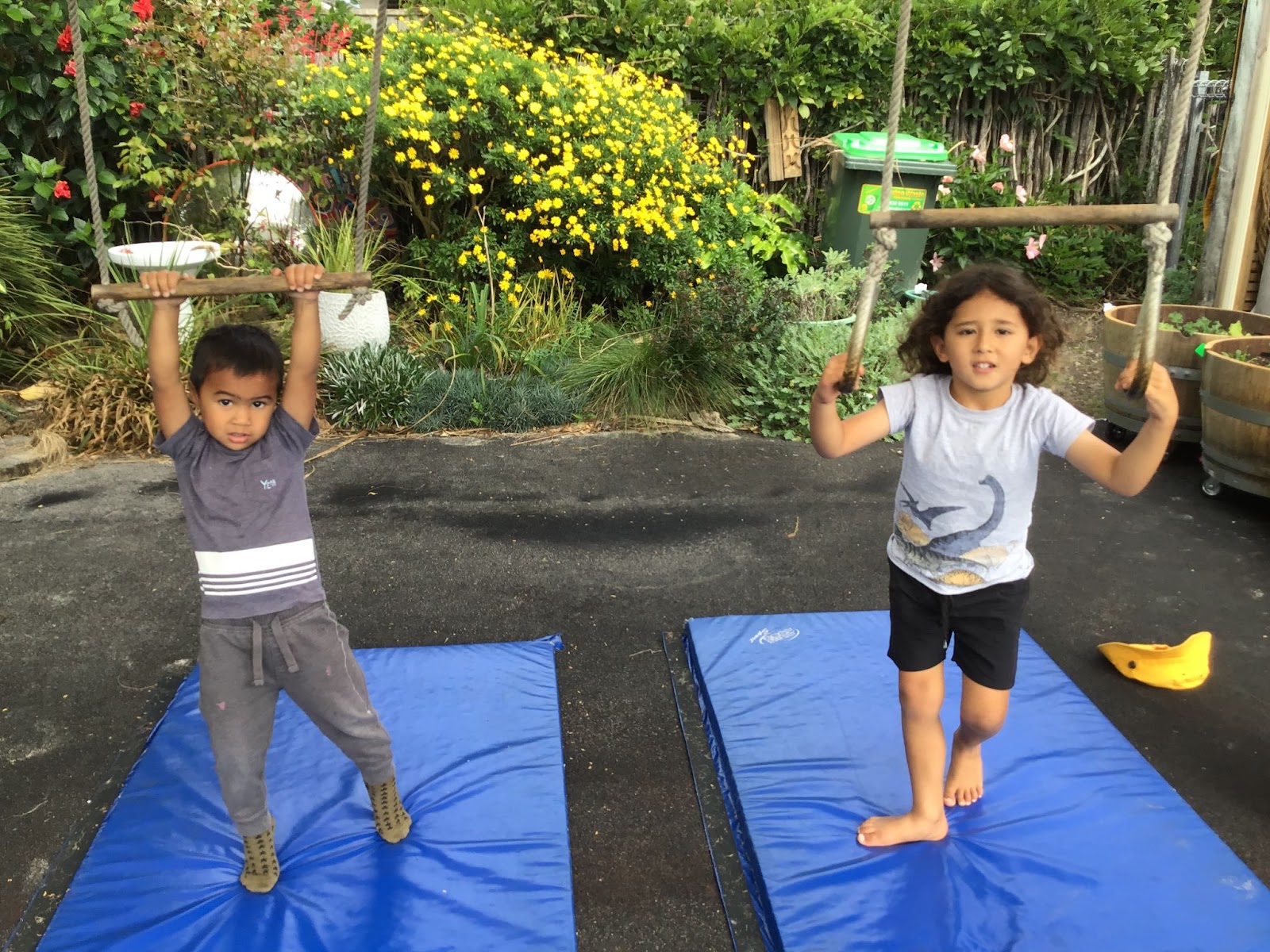


With physical play comes the element of risk. Risky play allows children to go beyond their limits and test and challenge what they can already do. They learn to use their bodies in new and challenging ways, but it is important to note that risky play for one child may be different for that of another child. It is important to know each child's individual physical capabilities in order to provide appropriate risk. This gives them opportunity to gain “Control over their bodies, including locomotor and movement skills, agility and balance, and the ability, coordination, and confidence to use their bodies to take risks and physical challenges”, (Ministry of Education, 2017).


Mairtown provides a beautiful outdoor environment that caters to a range of ages, abilities and interests, from our beginning children to those who are needing more challenge and risk. Slacklines are a great example of a resource that offers challenge for all ages. There are some children who are starting to engage in physical play who use the slackline to practice balance and coordination. Then there are children who are very confident in their physical capabilities who use the handles to hang upside down, do flips or balance with no hands.


A NO-RISK CHILDHOOD IS RISKY.

Risky play develops confidence, resilience, persistence, thinking, and reasoning skills. This will better equip children to manage challenging and risky situations both in childhood and later in life, but it is often tempting to limit access to risk-taking opportunities due to fear of potential injury, thus limiting experience in assessing and overcoming risks. Teachers' role in physical development and risky play is to provide opportunities that are challenging without being hazardous, allowing children the freedom to explore their own limits and test their own capabilities. Scaffolding the play experience supports children to achieve the goals they set for themselves.

Through conversations and decision making as a team, we have reflected on the physical abilities of the children in our kindergarten and have provided an environment that caters to all. This way we have evaluated any hazards and risks in our environments while ensuring it is challenging enough by supplying multiple resources to provide different challenges.

Ellen Beate Sandseter identifies six categories of risky play

-         Play with heights (where there is a risk of falling)

-         Play with high speed (situations of uncontrolled speed and pace potentially leading to a collision with people or objects)

-         Play with dangerous tools (Where there is a risk of injury)

-         Play near dangerous elements (involving the possibility of falling into or from something)

-         Rough and tumble play (where children can harm each other)

-         Play where children can hide or be out of sight of adults

Ministry of Education (2017) states that children will have, “knowledge about how to keep themselves safe from harm and the ability to take risks”.
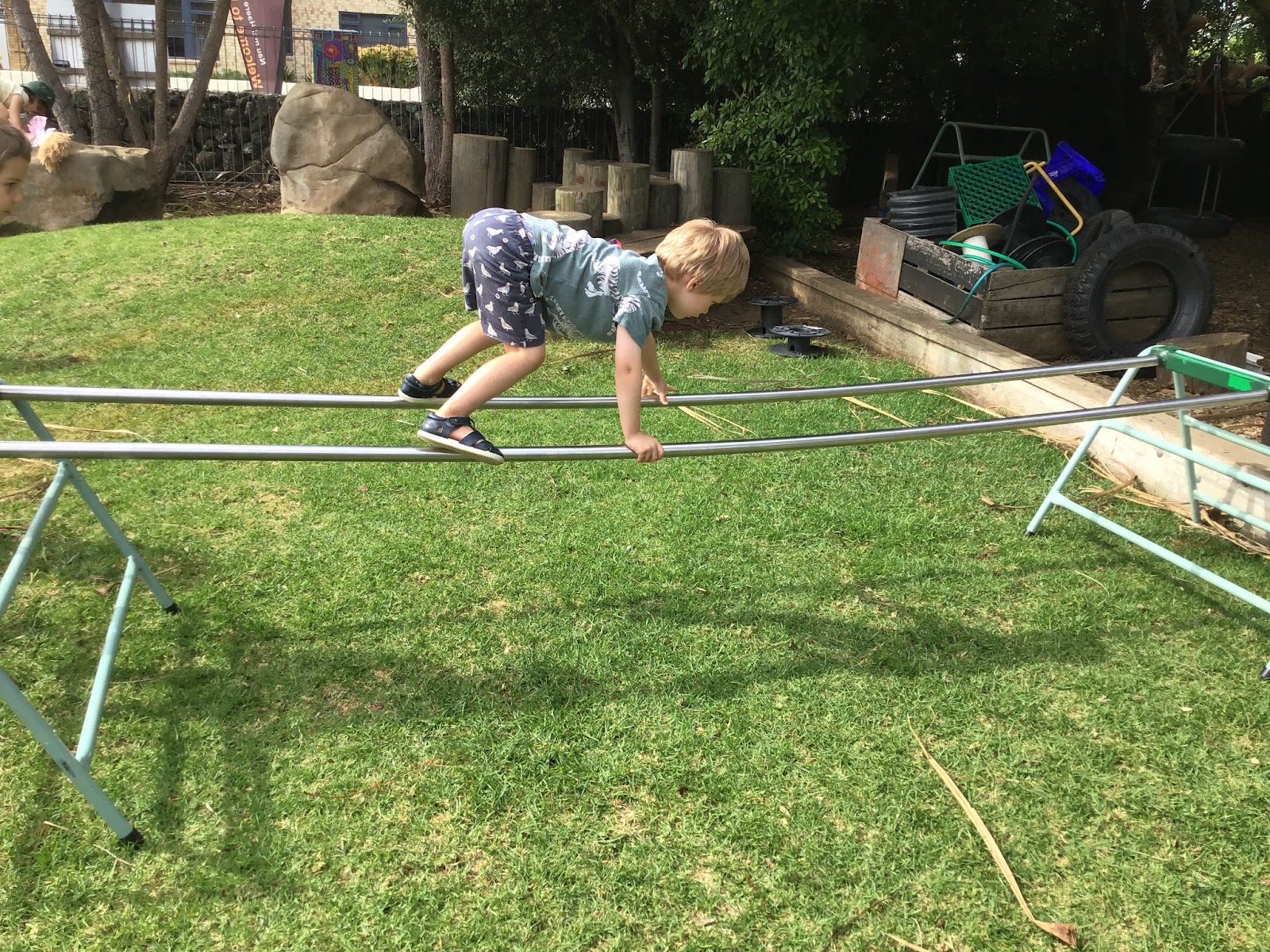
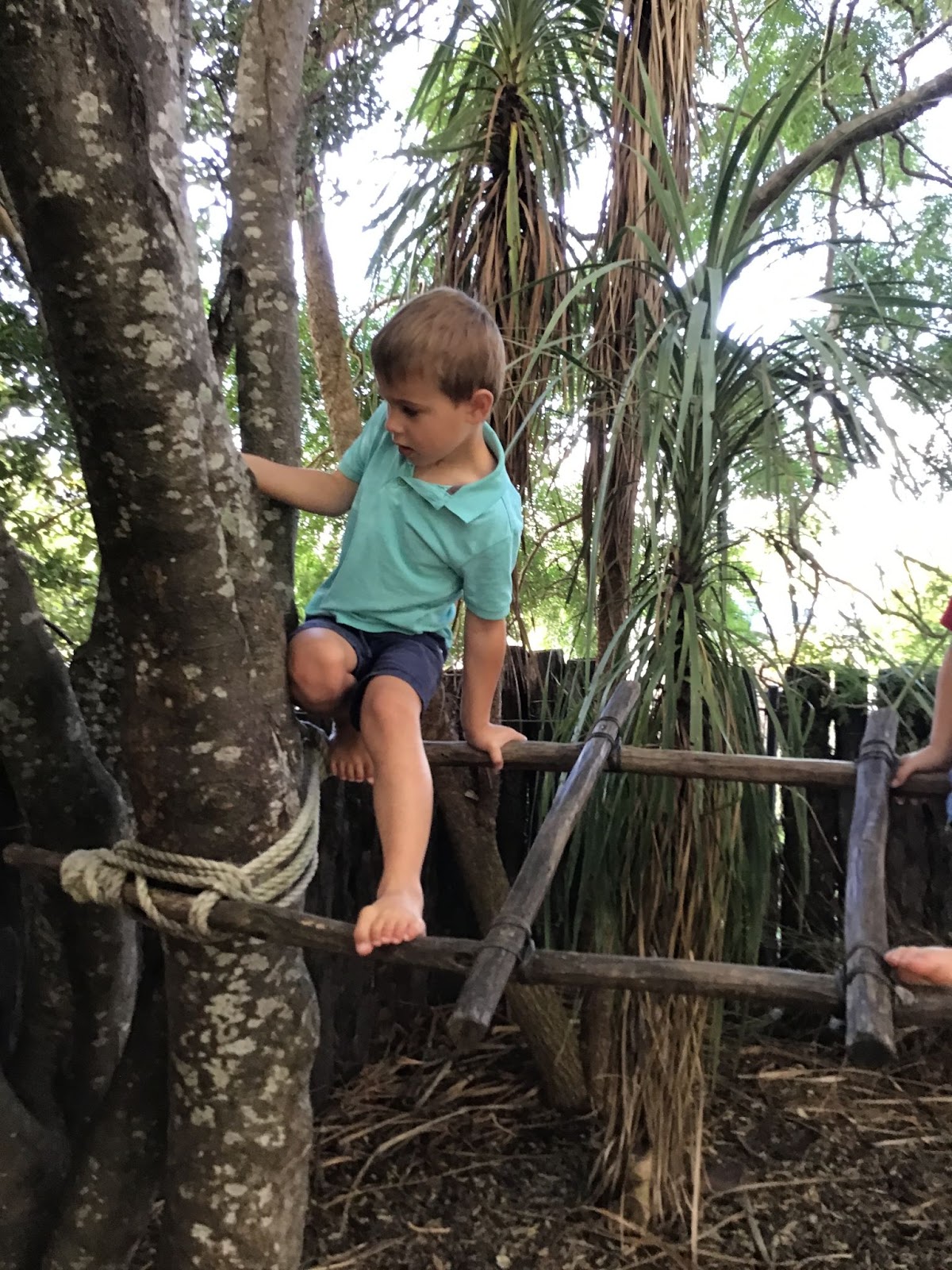

John Marsden would argue that one of the best things we can do for our kids is to raise them to love the adventure of life. And by doing that, we will set them up to be successful adults - able to face problems head-on, find solutions, and show resilience in adversity.

Engaging in risky play allows children to explore limits, try new experiences and develop their capabilities, allowing children to push themselves to the limits of their capabilities. Taking an ‘I can do it’ attitude is an important characteristic for effective learners.
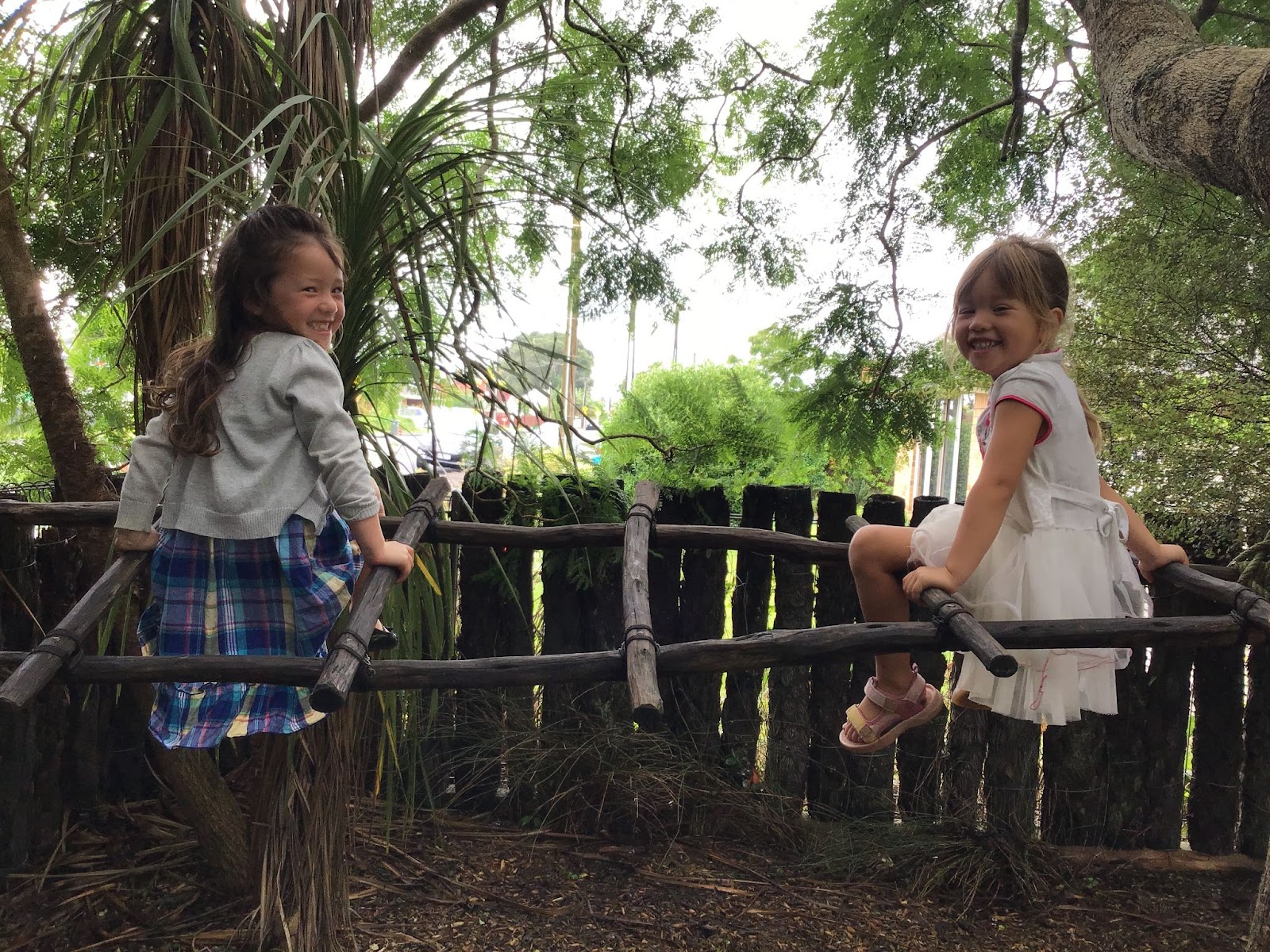
There are many benefits of physical and risky play and knowing what these benefits are can support kaiako to provide an environment that is challenging, extends learning, and encourages children to be more active while supporting children’s learning and development. Activities that allow them to come out of their comfort zone and try things, pushing the boundaries of what they are already able to do. 


“The more risks you allow children to take, the better they learn to take care of themselves”. - Roald Dahl


Nga mihi

Emily Dunn 


Tuesday, 10 May 2022

Our Mairtown Kindergarten Treaty


As our kindergarten whānau were settling in to the new year together, and Waitangi Day was approaching, I reflected on two things; how could we introduce the importance of Waitangi Day to our tamariki in a way which was meaningful and relatable to them, and how could our establishing community strengthen common understandings about working together and relating to each other and our environment in positive ways?

It seemed that te Tiriti ō Waitangi could open a door to beginning a shared kōrero, building towards both goals.

The New Zealand Curriculum states: “The Treaty of Waitangi is one of eight principles in The New Zealand Curriculum that provide a foundation for schools’ decision making.

The Treaty of Waitangi principle puts students at the centre of teaching and learning, asserting that they should experience a curriculum that engages and challenges them, is forward-looking and inclusive, and affirms New Zealand’s unique identity” (Clements, 2016).


During whānau time in the week of Waitangi Day, I spoke with the tamariki about how te Tiriti had been created, and signed by Māori chiefs, more than 180 years ago, with the intention of making it possible for Māori and the new English settlers to share life in Aotearoa. This is a special document which only our nation has. I wondered if they felt it would be useful for our whānau to think about and discuss what we needed to consider, for tamariki, kaiako and our environment, in order for everyone to enjoy kindergarten life and learn together too?  There was a general agreement that there were things that we needed to talk about, so the process of creating our own Mairtown Kindergarten Treaty began.

Throughout the ongoing education experiences our tamariki will experience, there will be many opportunities for them to discover more about the history of Aotearoa, and of te Tiriti, but at this stage my desire was to introduce an understanding of the existence and intention of the document by allowing them to explore the principles of te Tiriti ō Waitangi, those of Protection, Partnership and Participation, within a context which had meaning in their own lives and experience.

Our next step was to discuss each principle individually – what would this look like at kindergarten, and how could we make sure we were making it happen in our daily life?

Over a period of time, we would talk together at whānau time. One by one, I introduced a principle by name, and we shared what it meant, and how that could look at Mairtown kindergarten. We began our treaty with We will… to show that if this was to happen, we would all need to do the mahi together.

When it comes to introducing early childhood classroom rules, it’s best if you get the students to invest in the rules, too. If you’re really smart, you’ll get them to think that they came up with the ideas themselves! Getting students to help you come up with the ground rules is a great way to get them invested as well as get them to take ownership of each rule. (Knechel, 2021)

Throughout the process, I was so impressed with the engagement, contribution and thoughtfulness of tamariki and kaiako, with so many ideas being offered and discussed. It was agreed that Protection meant that we (including our environment) would all be kept safe, Partnership meant that we would be a team, and Participation meant that everyone could take part where they wished to.

As we unpacked each principle, we talked about what we would all need to think about and do in order to make it happen, and many insightful ideas were shared.


When all of the principles had been talked about individually, I created one document from the three lists, then re-presented that to the group. I asked them if they felt that I had put all of their ideas down correctly and in the right place. Interestingly, there were some who felt it was not quite complete, or that actions were not noted under the correct principle, so I noted down the changes that needed to be made and re drafted the document.


 I then re presented the document again, and this time there was consensus that the document was acceptable to everyone and that they felt happy to sign that they would uphold the treaty as now written.


Once our signing ceremony was done, our treaty was placed on the wall beside our whāriki. This final step was reached after several weeks had passed, but the revisiting of the discussion over a number of opportunities had allowed all of our tamariki to be involved, to consider the concepts we discussed, and to be heard if they had thoughts they wished to share.

Since these discussions, it has been amazing to hear tamariki reminding each other of them in play or bringing thoughts about them into group conversations. As with all community structures, we are not all always perfect and living within our treaty has its bumps and wobbles, but it is so helpful to build our community within our shared understandings. This process was also a great way to introduce understandings of the unique identity of our bicultural nation in a positive and aspirational way to our young learners and future leaders, as tamariki experience the importance of upholding a shared agreement of what we all need from each other in order to live and learn successfully together.

Ultimately, the rules become a tool for learning about being a member of a democratic community. Each rule represents a step in the process of our children learning to live together in a community of their own creation. And teaching community building skills is one of the most important things we do. That's the road to happiness. (Teacher Tom, 2009)

Ko te kai a te rangitira he kōrero

The food of chiefs is dialogue

Ma to wā

Anne Bawden

Tuesday, 22 March 2022

Our New Mud Kitchen Outside Space

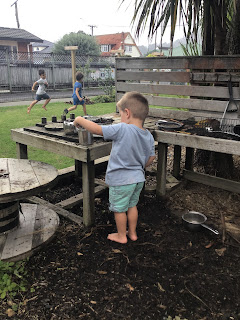
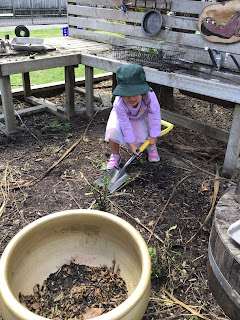
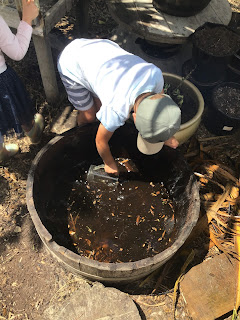
Our mud kitchen at Mairtown Kindergarten was made by whānau, (Nigel, Phil and Mike, three fathers) in 2014 and has moved around the kindergarten finding its perfect spot for some time. Well, I think we may have found one! He māra kai had come to an end, currently relocating its spot within the kindergarten, so we thought this may be a perfect spot to create a mud kitchen area. The mud kitchen was re-positioned nestled underneath our Ti kouka/ cabbage tree and beside our sandpit, allowing tamariki to explore and reigniting their interest. Tamariki noticed this new space and it has become a very busy and popular spot to explore on their own and alongside their e hoa.  


Mud play encourages creative thinking and supports tamariki to freely create with the open-ended resources on offer. It’s about the process not the end product. It provides opportunities for imaginative play and allows tamariki to act out their own play scenarios. Mud pies, soup, blueberry pancakes, coffee and tea and food for the dog have been a few creations made in the mud kitchen so far.


"What children learn does not follow as an automatic result from what is taught, rather, it is in large part due to the children’s own doing, as a consequence of their activities and our resources."
 —Loris Malaguzzi, The Hundred Languages of Children


Actively playing with mud also has many health benefits. “Scientists have now confirmed something that children have always instinctively known; playing in mud is a joyful experience. Recent research has shown that dirt contains microscopic bacteria called Mycobacterium Vaccae which stimulates the immune system and increases the levels of serotonin in our brains, an endorphin that soothes, calms, and helps us to relax (Rupiper, 2017).


Mud play allows tamariki to develop, refine and practice many skills; such as fine and gross motor skills, hand-eye coordination, turn taking, confidence and independence, opportunities to take the lead, curiosity, exploring through their senses, mathematical opportunities, language development and cognitive growth. Mud play also provides a connection to nature, opportunities to explore, ground themselves, and an appreciation for Papatūānuku and the world around them.

The enviro-schools kaupapa guide our teaching, and we uphold Papatūānuku as an important kaiako; in nature herself the possibilities to learn and grow have no limits” (Mairtown Kindergarten Philosophy, 2020). 


Tamariki have been working hard alongside their kaiako to transform this spot into a beautiful area that is welcoming, and inspires creativity, imagination, and curiosity. Firstly, we had to remove the old dirt, transporting it to our he māra kai, using many buckets. During this time digging and transporting the dirt tamariki shared their own experiences, sharing different techniques and stories of helping in the garden with whānau at home.


We then raked the area so it was flat, then began the planning process. We sourced some bark from around our bark area, laid out the stepping stones creating a pathway, then added our bark. We also unscrewed the lid off our old wooden water barrel, removed the water and repurposed it to create a home for our mud. Next, we needed to plan our planting, deciding what we needed to make this space its own, and creating a little barrier between the mud kitchen and sandpit. We sourced a plant already established within our environment and after a hard day of tamariki and kaiako working together and problem solving around how to remove it, we were able to relocate some of the plant, dividing it up into smaller cuttings and enclosing the space.


Lastly, we added some metal resources, which included pots, spoons and jugs and a few self-watering hanging planters with herbs. During a visit from Kim Townsend our Professional Practice Manager, she shared her knowledge around replanting plants. From her knowledge we then decided to give our relocated plants a haircut, using the cuttings for play and hoping this would make it easier for the plant to recover from transplant shock.  


This project has allowed us at Mairtown Kindergarten to weave the Enviroschools guiding principles and kaupapa into the processes and daily practices within our playscape. We were able to reuse materials and equipment from around the kindergarten, gain knowledge through research and conversations and empower learners through planning and active participation throughout this project. We will be able to continue using this knowledge when we begin our Enviroschools garden project later in the year. 


Ngā mihi
Emma Quigg

Translate